Skip to content

Jason

MEMORIAL DAY NOTES

Poor People's Campaign Memorial Day 2018 protest on Boston Common. Courtesy of the Poor People's Campaign.
Poor People’s Campaign Memorial Day 2018 protest on Boston Common. Courtesy of the Poor People’s Campaign.


Peace actions, Harvest Co-op needs help


May 31, 2018

BY JASON PRAMAS @JASONPRAMAS


So I’m writing on a holiday weekend that began with my joining DigBoston and Boston Institute for Nonprofit Journalism colleague Chris Faraone in having some fairly nasty dental work. What better excuse, then, for doing some brief dispatches this time out instead of the single topic I typically focus on with an Apparent Horizon column?


Peace activists arrested at Hanscom AFB

After allowing the planet to breathe a collective sigh of relief for a few weeks on the Armageddon front, President Donald Trump just tossed away his Nobel prize prospects by cancelling a planned summit with North Korean leader Kim Jong Un over some nonsense or other. [No wait, maybe it’s back on now! Or not. Whatever. Moving on to my point …] But it turns out Bostonians had little reason to relax anyway. Because nearby Hanscom Air Force Base is now the home to the Program Executive Office for Nuclear Command, Control, and Communications (NC3).


According to the Hanscom website, the NC3 unit “executes a portfolio of 17 programs valued at $1.2B over the FYDP that provide survivable and endurable communications for the nuclear enterprise. Additionally, the directorate is responsible for integrating over 60 individual nuclear command and control communications systems that underpin and enable nuclear deterrent operations.”


Clever though it may be that the military can develop communications systems that can survive nuclear attacks, humanity cannot. Since there are very few plausible scenarios in which “limited” nuclear strikes of the type that the Trump administration has spoken casually about will not escalate into an all-out conflagration. And with NC3 in such close proximity to Boston, we can now expect at least one more nuclear warhead to be added to the several with which our city will be hit in the event of World War III.


Which is why six peace activists got arrested protesting it over the weekend, according to the Lowell Sun. John Back, of Arlington and the Cambridge Friends Meeting; Laura Evans, of Unitarian Universalist Society of Rockport; Pat Ferrone, of St. Susanna Parish in Dedham;  and Dan McLaughlin, of Cambridge; Jerald Ross of Chelmsford, and Massachusetts Peace Action; John Schuchardt, of the House of Peace in Ipswich, and Veterans for Peace were busted for attempting to deliver a critical letter to the Hanscom base commander.


In an op-ed in the Metrowest Daily News, Mass Peace Action leader Cole Harrison points out that “the Massachusetts Congressional delegation, including Sens. Elizabeth Warren and Ed Markey, and Hanscom area Congressional Reps. Seth Moulton, Katherine Clark, and Niki Tsongas, have expressed support for the DoD’s decision to house the NC3 program in the heart of residential Massachusetts.”


Not cool.


To join Mass Peace Action and affiliated organizations in putting heat on such feckless congresspeople, and the military-industrial complex that convinces them to support the suicidal expansion of America’s nuclear “warfighting” capability, plug in at masspeaceaction.org/act/.


Protest links war economy and homeless vets

In a related action, the Poor People’s Campaign took to the Boston Common on Monday to protest a federal government that increases spending for war while cutting money for social programs—resulting in, ironically, more veterans becoming homeless.


The event featured 30 red tents that symbolized the situation, and speakers addressing topics ranging from gun violence to racism, according to the Boston Globe.


A full slate of oppositional activities is underway. To get involved, go to the campaign’s national website at poorpeoplescampaign.org or connect to its eastern Massachusetts chapter at facebook.com/pg/emappc.


Member-run markets in trouble

The Harvest Co-op grocery stores have been losing money for years and are now in danger of closing, according to the Cambridge Day and the Jamaica Plain News. Like other cooperative markets, members pay with investment and sweat equity to provide groceries for themselves at a discount. Shoppers who are not members pay full freight. But membership in Harvest, which was founded in 1974, has been trending downward for some time—from 4,000 in 2012 to 3,200 this spring.


In a recent email, Harvest leadership urged members “to take some obvious steps such as using the co-op for more shopping, especially by buying more bulk items, prepared foods, supplements and body care items; urging more people to switch to Co-op shopping; and paying cash.” They also asked them to buy a $200 gift card and not use it for two years.


It remains to be seen if such measures can help close a $300,000 funding gap before the cooperative is expected to start closing its stores in August. But now would be a good time for new folks interested in helping out to consider becoming members. Interested readers can join Harvest at harvestcoop.com/membership.


Apparent Horizon is syndicated by the Boston Institute for Nonprofit Journalism. Jason Pramas is BINJ’s network director, and executive editor and associate publisher of DigBoston. Copyright 2018 Jason Pramas. Licensed for use by the Boston Institute for Nonprofit Journalism and media outlets in its network.


DigBoston has gone on record joining the movement to abolish nuclear weapons.


Editorial Note: Op-eds wanted. A quick reminder to DigBoston fans. We’re always looking for 500-700 word opinion articles from those of you who work with local organizations trying to make life better for Bostonians in tangible ways. Either politically, socially, artistically, or culturally. If there’s some important doing that you think the Dig audience should know about, then send finished drafts to editorial@digboston.com. Hate groups, naturally, need not apply. And fair warning that public relations and marketing hacks who think this is an invitation to send us more bullshit than they already do daily will be mercilessly mocked. And bottom feeders who try to get us to run “articles” that are really ads will be invited to to pay us $10,000 for each “placement”—and informed that we’ll surround their copy with “THIS IS A FUCKING AD” legends in some giant ugly font should they ever be stupid enough to pony up that much lucre.

—Jason

TOWNIE: CITY ON A HILL

Worcester MA with covered wagon


Global warming will flood Boston. Why not move the state capital to Worcester?


May 26, 2018

BY JASON PRAMAS @JASONPRAMAS


Many small American cities have boosterish metro research organizations that look like a cross between a public policy outfit and a chamber of commerce, and the Bay State’s second biggest urban area is no exception. The Worcester Regional Research Bureau (WRRB) was founded in 1985 during a period when all of Massachusetts’ major cities were facing a funding crisis caused by the tax-slashing Proposition 2 1/2 and needed to find ways to keep their local economies functioning with less funding from state government. Since that time, according to its website, the “Research Bureau has prepared over 220 reports and held over 200 forums on topics including public administration, municipal finance, economic development, education, and public safety.” Its board is like a who’s who of the Worcester power structure.


In March, WRRB released a 10-page report, “Brokering a New Lease: Capturing the Value of State Offices for Massachusetts.” Not exactly the kind of title that’s going to inspire headlines, and it didn’t—only receiving coverage in the Worcester Business Journal and Commonwealth magazine. But the white paper actually makes an interesting point: Why are the headquarters of the many state agencies mainly in the Hub?


Boston has very expensive real estate prices. And even though the state owns some office buildings around town, many agencies lease commercial space for their headquarters. So, WRRB reasons, wouldn’t it make good sense to move some of those HQs to Worcester? Saving the Commonwealth money, and helping the Worcester economy with lots of decent state jobs in the process?


Consider that, according to the report, Class A office space in Boston was running as high as $60.85 per square foot in 2017. It then points out that the “state pays an average of $37 per square foot across its Boston lease agreements, with a high of $73 per square foot near Boston City Hall and a low of $19 per square foot in Hyde Park.”


Meanwhile, “Brokering a New Lease” continues: “The [WRRB] consulted the City’s Economic Development Office and local real estate brokers and identified 275,000 square feet of available space across eight buildings that could feasibly house a state office. … The average rent was $21.31 per square foot, and one local broker said $22 per square foot would be a reasonable minimum estimate for new leases involving capital investment.”


A savings of $15 per square foot on average—which translates to my back-of-the-envelope estimate of $4,125,000 a year that would stay in the Commonwealth’s coffers—is nothing to sneeze at. It’s true that removing 275,000 square feet of the 1,675,806 square feet that the state currently has under lease in Boston, according to the report, would mean that the Hub stands to lose 16.4 percent of its state office space. Not an inconsiderable economic hit for Boston’s commercial real estate market, and something WRRB staff do not seem to be concerned about. But Worcester’s gains would potentially offset Boston’s losses from such a deal, when considering the state economy in its entirety.


Which makes the report’s rationale for moving some agency offices sound reasonable on cost-benefit grounds alone—although I can understand why many state employees might not want to move from more cosmopolitan Boston to a city with less social and cultural opportunities on offer. On the other hand, with a significantly lower cost of living, state salaries will stretch a lot further in Worcester County. To the point of allowing low-level bureaucrats, who couldn’t dream of buying so much as a condo in Boston these days, to buy a house out there.


But what interests me about the report is not so much its original subject as something I’m sure that WRRB staff hasn’t yet given the slightest thought. Over the last few years, I’ve written numerous columns and editorials sounding the alarm about what I feel is Boston’s woefully inadequate preparations for the several major global warming-induced crises that scientists expect coastal cities to endure in the coming decades. One of the most dangerous of those is sea level rise. Much of Boston is low-lying former wetlands, and unless we start building major harbor-wide flood defenses soon, we don’t have a prayer of slowing the Atlantic Ocean’s reclamation of those areas. And doing grave damage to critical systems like power, transportation, and sewage in the process.


Even if Boston does build huge dikes, and make other needed changes to the city design, it’s only a matter of time before the ocean wins. Since sea levels are expected to continue to rise for hundreds of years until, potentially, all of Earth’s major land-based ice sheets have melted into the ocean.


So why not move the state capital to Worcester—a city whose elevation is 480 feet—in stages? Starting with getting state agencies out to the city appropriately nicknamed the “Heart of the Commonwealth” in the manner the WRRB suggests. Then building the bullet train to Boston that former gubernatorial candidate Setti Warren is so excited about. And gradually transferring more and more of state government to the “City of Seven Hills” (the place really has a lot of nicknames). Until, eventually, we move the State House itself.


In addition to helping state government better weather global warming, having our capital in the middle of the state could go a long way toward healing the many divisions between eastern and western Massachusetts.


Don’t get me wrong; this is not the kind of proposal I’d make if we weren’t facing climate change dire enough to threaten the survival of the human race. But we are. Not today. Not tomorrow. Someday soon, though. We’re already seeing signs and portents now in the increasingly frequent “wild weather” that dishonest meteorologists like to prattle on about on Fox and its ilk. Including Worcester becoming more of a tornado alley than it already was—something I don’t think is nearly as much of a threat as the anticipated 10 feet of sea level rise Boston is facing by century’s end. More, if the land-based Greenland and Antarctic ice sheets start sliding into the ocean faster than the majority of climate scientists are currently projecting.


In past writing, I’ve suggested moving critical Boston infrastructure to the hills in and around the city. We will still need to do that. But growing Worcester while shrinking Boston is another smart move to consider. And why stop at just moving the state government? Why keep the city’s population exposed to ever more fierce hurricane- and winter storm-driven flooding when we can gradually move to a nearby city that could absorb quite a lot of our population before reaching capacity? A city acceptably far from the sea and major river systems, and high enough to not have to worry about being permanently flooded out (except, perhaps, in the worst possible scenarios).


Anyhow, food for thought. I’d be curious to hear what the WRRB staff—and other policy wonks and urban planners in “Wormtown” (loving these nicknames)—think about my proposal. I make it in earnest, and hope it is taken in the spirit with which I offer it. They can reach me, as ever, at jason@digboston.com.


Townie (a worm’s eye [ironic, no?] view of the Mass power structure) is syndicated by the Boston Institute for Nonprofit Journalism. Jason Pramas is BINJ’s network director, and executive editor and associate publisher of DigBoston. Copyright 2018 Jason Pramas. Licensed for use by the Boston Institute for Nonprofit Journalism and media outlets in its network.

EDITORIAL: MEDIUM WELL

Facebook middle finger
Image by gfkDSGN. CC0 Creative Commons. Modified with permission by Jason Pramas.


Democracy requires public control of social media giants


May 16, 2018

BY JASON PRAMAS @JASONPRAMAS


In this edition of DigBoston, our Editor-in-Chief Chris Faraone has already written at some length about how Medium—which is essentially a glorified blog farm with a puzzlingly opaque social media component—screwed our nonprofit, the Boston Institute for Nonprofit Journalism (BINJ), a few days back by precipitously terminating the paid subscriptions of dozens of our monthly supporters on the platform.


After we questioned the company’s action, a low-level flunky claimed we had been given a whole entire week’s advance notice in an email that we subsequently explained we never received. After we very publicly cried bloody murder, and got our plight written up in Nieman Lab and Columbia Journalism Review, Medium leadership offered us, and a number of other small publishers, four months of the income we would have made had they not kicked us to the digital curb.


There are many problems with the way events transpired, but the worst one is the fact that mere mortals such as ourselves do not control our presences on corporate social media bigs in any way, shape, or form. The billionaires that own them—that became rich by creating “walled gardens” under their micromanagement and have stubbornly resisted the creation of public and nonprofit social media alternatives—are the only people that could reasonably be said to control them. Even though many of them have built their fortunes on technology originally created by publicly funded basic scientific research that they were allowed to essentially steal. Not dissimilar from leaders of the former Soviet Union that were allowed to privatize once-public industries and become billionaires themselves. Distorting the politics of various successor states toward oligarchy in the process.


And, under today’s robber baron capitalism, billionaires of any provenance are extremely difficult to bring to heel with any kind of public regulation or taxation. Let alone criminal charges.


Medium is hardly the worst, or anywhere near the largest, of the social media scofflaws in question. Its founder, Ev Williams, seems to be a thoughtful and genial enough fellow for someone in his position. But, as F. Scott Fitzgerald famously said: “Let me tell you about the very rich. They are different from you and me. … Even when they enter deep into our world or sink below us, they still think that they are better than we are. They are different.”


Truer words were never spoken. Especially when it comes to a person who has used his power and privilege to change the business model of Medium—a corporation that’s been valued in the hundreds of millions—on more than one occasion.


So, BINJ and the other affected publishers are the latest victims of the caprices of a billionaire. Who ironically wants to help improve media with the selfsame company that just made life more difficult for a group of struggling media outlets.


It is precisely for this reason that both the nonprofit side (BINJ) and for-profit side (DigBoston) of this operation that I half-jokingly call the “Greater BINJ-DigBoston Mediaplex” are working to help build alternatives to corporate social media. As we announced in an editorial a couple months ago.


We believe that digital media can only move forward by returning to the most promising visionary thinking of the earliest internet pioneers. Including the idea that only a decentralized communication network can be truly democratic.  And that the ethos of democracy must be baked so deeply into its architecture that it can never be displaced.


Our enterprise can only play a small part in this “strategic retreat.” But we are pursuing that initiative with vigor. Both by moves we are making to change how BINJ and DigBoston use the internet and by trying to organize our peers in the news industry to change our collective digital lot for the better.


The former effort involves transitioning away from Facebook—which we adjudge to be the worst of the social media giants—and toward first Twitter then other more democratic social media as it emerges. The latter effort—to which we’re dedicating a small conference this weekend—involves helping construct the democratic social media alternatives we hope to ultimately focus on.


But even if such voluntarist endeavors succeed in scaling up to control some reasonable percentage of the relevant markets, they will not stop huge social media corporations and the billionaires that control them from continuing to have far more political, economic, and social power than is healthy for a democratic society.


So what will stop them? Not breaking them up into smaller companies. As economist Gar Alperovitz points out in his book, What Then Must We Do? Straight Talk About the Next American Revolution, old-fashioned trust busting always ends up with the smaller companies reforming into new giants. Thanks largely to “regulatory capture”: Big corporations colonizing regulatory agencies with insiders and then doing what they want—as we’ve seen most clearly of late with former telecom exec Ajit Pai getting the top seat at the FCC, then killing net neutrality.


Which way forward then? Alperowitz says that even the libertarian economists of the Chicago school—most famously Milton Friedman—identified the futility of breaking up huge companies. Leading Friedman’s mentor Henry C. Simons to quip, “Every industry should be effectively competitive or socialized.” Failing to do so, he and other Chicago economists thought, would lead to an ongoing series of societal crises. Which would certainly include the new kinds of crises that corporate social media has sparked. Notably “surveillance capitalism” where consumers’ every move is being monitored and thought anticipated in the service of maximizing profit in ways never before seen. With all the resulting negative outcomes—like social media addiction and political chaos—externalized to a failing democratic system largely controlled by an ever-shrinking number of multinationals and financial concerns.


And how best to socialize corporate social media? Alperowitz suggests turning the companies controlling the commanding heights of any sector of the economy into public utilities. So it must go with major social media companies. They must be converted into a heavily regulated and government-managed utility in such a way as to maximize democratic decentralized digital communication and provide it as cheaply as possible for the good of all. While, I would add, activists on the ground continue to develop a constellation of independent social media projects run by nonprofits, cooperatives, and social benefit corporations around the new government-funded network to allow for maximum information and technological diversity—and keep a future public social media utility honest.


Some kind of national security state panopticon is not what we’re aiming for here. Rather, the new utility could be run by elected regional boards with mandated seats for key community constituencies and space for lots of meaningful grassroots input.


Doing all that—plus related work to socialize telecoms and cable companies—will take a massive protest movement. Like most everything that involves uprooting entrenched institutions and replacing them with new, more popular institutions. And that movement will have to be international. It’s the only way to go. Because social media corporations are multinational, and most governments—corporate-dominated as they are—won’t do the job on their own. Not without a protracted struggle.


Going forward, DigBoston (and BINJ) will be looking to ally with good organizations willing to fight hard on these issues. And we’ll be sure to let readers know which groups we think are doing the best work as they emerge on the political stage.


So, stay tuned to these pages. We’ll be doing our damnedest to guide you through what is sure to be a wild ride.


Jason Pramas is the executive editor and associate publisher of DigBoston, and the network director of the Boston Institute for Nonprofit Journalism.

URBAN MISSION

City College of Boston


The solution to UMass Boston’s woes could start with a city-run college


May 9, 2018

BY JASON PRAMAS @JASONPRAMAS


There was an interesting conversation recently between two people who I often criticize for being… um… insufficiently public spirited. The Boston Globe’s Shirley Leung asked Boston mayor Marty Walsh a great question: “What if the city took over the University of Massachusetts Boston?” Walsh, to his credit, replied: “Am I looking to take on a potentially new school? No. … Do I think Boston potentially could be positioned well enough to handle it? Absolutely.”


UMass Boston has been struggling to make ends meet for many years. According to the Dorchester Reporter, union activists at the school say that student tuition and fees, state appropriations, and grants, are actually sufficient to cover its operating costs. But UMB labors under more than $30 million in structural deficit from the cost of belatedly rebuilding a campus that was thrown together with substandard materials by corrupt contractors on top of a landfill back in the 1970s. And a lot of other debt besides.


Successive legislatures and governors have been unwilling to fork over the money to cover the long-needed repairs—sticking a school with an “urban mission” to serve working-class Boston students with a mountain of debt that it can’t clear on its own. Even after controversial longtime chancellor J. Keith Motley was ousted last year and replaced with interim chancellor and state government hatchet man Barry Mills. Who presided over the layoff of dozens of critical faculty and staff in the interest of “balancing the school budget” even though the UMB community is not to blame for its plight.


As the state prepares to bring in a new “permanent” chancellor, it is not prepared to do the right thing. So, it’s definitely worth pushing Walsh to at least produce a serious study on whether a city that struggles to properly fund K-12 education could really do a better job running a medium-sized research university that the Commonwealth can.


It remains to be seen if UMass Boston is too heavy a fiscal burden for the city of Boston to take on. But there is a way that Mayor Walsh could dip his toe into the murky waters of administering a four-year public college without taking over UMB in its entirety. That would be to consider a plan for a separate city college that I had a hand in developing between 2005 and 2007 while I was a student, and then a graduate teaching assistant, at UMB’s College of Public and Community Service (CPCS). It was originally conceived as a possible response to the university’s destruction of that innovative and popular division.


In brief, CPCS was the most diverse college within the most diverse university in the entire Northeast. Not only did it focus on recruiting working-class Boston students from nontraditional backgrounds—like single mothers—it also put a lot of effort into recruiting older working students like me who had never finished college. It was founded in 1972 and 1973 by professors and politicians who believed so strongly in UMB’s urban mission that they developed a college purpose-built to take students from poor city neighborhoods with few opportunities and turn them into stellar university graduates. Which it did with aplomb for over 30 years.


The following section of the CPCS Mission Statement shows how seriously the school took its mandate:


The college works toward overcoming the attitudes, beliefs, and structures in our society which prevent access to the resources that exist and discourage full participation in economic, civic, cultural and political life. As an alternative educational institution, CPCS endeavors to function as an inclusive, democratic, and participatory learning community which promotes diversity, equality, and social justice.


Unfortunately, the administration of a decade ago—led by Motley—decided that the few bucks more it cost per year to educate a CPCS student compared to a “regular” UMB student was too much to spend. And it had deep ideological differences with CPCS pedagogy. Especially the rejection of letter grades as a metric for success. So it killed the college in all but name by 2008. Despite strong protests by its students, staff, and faculty.


Given the current crisis at UMass Boston, Mayor Walsh could revive the plan for a new City College of Boston that myself and other campus activists first suggested… as a successor to CPCS. The goal would be to provide a place for a few hundred working-class native Bostonians at a time. Students who can handle a four-year degree program academically, but are being driven out of UMB by its ever-rising sticker price—and its shift to attempting to compete with local private universities for white suburban middle-class students and full-freight paying foreign students by building dorms. Which is being done, in part, to allow its latest cowardly administration to get rid of its debt load without direct state aid.


The City College could hold classes in existing municipal facilities and start with a few dozen faculty and staff. It would be run by the city of Boston. And ideally, it would strive to charge students no more than the Hub’s two-year community colleges, Bunker Hill and Roxbury… which it should work with closely.


If the new college does decently well for a few years, then maybe the city could take over UMass Boston in its entirety, merge the two, and move on to strengthen its urban mission university-wide. Returning the school to its urban-focused roots… with local sources of funding that are somewhat more receptive to community needs than state funding sources… and a new sense of purpose.


Even such a bold move would not absolve the legislature and the governor of their responsibility to properly fund Mass public higher education as completely as the state budget will allow—rather than doing things like dumping $1.5 billion on the biotech industry—and to lobby the federal government ferociously for more funding as well. But it could at least ameliorate an increasingly dire situation for Bostonians seeking to improve their lot by obtaining a bachelor’s degree. And get the city back in the business of expanding public services rather than privatizing them.


This column was originally written for the Beyond Boston regional news digest show — co-produced by the Boston Institute for Nonprofit Journalism and several area public access television stations.


Note of Appreciation

Big thanks to Bill Marx of Arts Fuse and Greg Cook of Wonderland (and sometimes DigBoston) for inviting me to participate in a great forum “For the Love of Arts Criticism II: Small Magazines and Bloggers” held on Monday at Rob Chalfen’s fabulous music and arts space, Outpost 186, in Inman Square. Props to fellow speakers Chanel Thervil of Big Red & Shiny; Pat Williams of the Word Boston; Heather Kapplow of, like, everywhere, including DigBoston; Franklin Einspruch of Delicious Line (and DigBoston); Marc Levy of Cambridge Day; Oscar Goff and Chloé DuBois of Boston Hassle; Dave Ortega of the Somerville Media Center; Jameson Johnson of Boston Art Review; Lucas Spivey of Culture Hustlers podcast; Rick Fahey of On Boston Stages; Suzanne Schultz of Canvas Fine Arts; Olivia Deng of several publications, including DigBoston; noted events producer Mary Curtin; Aliza Shapiro of Truth Serum Productions; former Boston Phoenix, Improper Bostonian, and Boston Magazine writer Jacqueline Houton; and a number of other folks. Read Greg Cook’s fine article on the proceedings for all the details at gregcookland.com/wonderland.


Apparent Horizon is syndicated by the Boston Institute for Nonprofit Journalism. Jason Pramas is BINJ’s network director, and executive editor and associate publisher of DigBoston. Copyright 2018 Jason Pramas. Licensed for use by the Boston Institute for Nonprofit Journalism and media outlets in its network.

BROKEN MEDIA, BROKEN POLITICS

Charlie Baker


If Mass journalists were doing their jobs, Baker would not be so popular


May 1, 2018

BY JASON PRAMAS @JASONPRAMAS


It’s always funny to hear that Charlie Baker is a very popular governor… The most popular governor in the country at the moment, according to polls. Because he doesn’t do anything very differently than his predecessor Deval Patrick did. Or than Mass House speaker Robert DeLeo does. Or than most any state Democratic leader when it comes down to core economic issues—with the exception of the leaders with little actual power.


Baker, Patrick, DeLeo, and all their ilk in both major parties essentially follow the same game plan. They work to lower taxes for those most able to afford them, cut desperately needed social programs to the bone, and give away as much money as possible to giant corporations.


Much of the rest of what they do is posturing for the various constituencies that make up their particular electorates. And that’s the stuff that gets the most media coverage. Which is not to say they’re necessarily insincere about such activity. But they’re elected to represent the wealthy interests that run the Commonwealth, and the work they do for that most important constituency is always their top priority.


So when Patrick and Baker, for example, shovel over $1.5 billion in free public money at the biotech industry or arrange millions in tax breaks and direct state aid for huge companies that don’t need them on an ongoing basis—with DeLeo’s blessing in both administrations—to the extent those acts get coverage, they’re presented as done deals that are “good for the economy.” Then it’s on to the next press spectacle of the day. Events where they can “show leadership” and the like. As when there’s a snowstorm. In Massachusetts, a northern state noted for its frequent snowstorms. And the current governor gets on TV and says “stay indoors during the snowstorm.” That is apparently showing leadership.


Which explains Baker’s high numbers, I think. Simple public relations. Accentuate the positive, eliminate the negative, and all that. With most of the major news outlets gamely playing along. And his numbers are higher than Patrick’s were because he’s a white guy in a super racist state that likes to think it’s super anti-racist.


That’s what results in people that don’t pay attention to politics—including the vast majority of white voters—going, “Oh, Baker’s such a nice man” when pollsters ask their opinion of him. More than they did with Patrick. No doubt Baker is a nice man in person or whatever. Lots of people who do bad things when they have power are personally “nice.” Like, I’m sure when some buddy of his from childhood needs money, he’ll give it to him. Or at least loan it to him. But when all the legions of people he doesn’t know personally need good jobs with benefits, need free higher education, need major improvement to infrastructure like the MBTA—because of entrenched structural inequality—that’s a different story.


A story whose narrative you can hear if you listen to Baker’s remarks to the 2018 Mass Republican Convention in Worcester last weekend.


Stripping away obligatory pleasantries and nods to major supporters, the speech was aimed at the same white middle-class suburbanites who remain the base of the state Republican Party. Baker addressed them directly at one point while enumerating the “successes” of his administration: “We offered early college programs, our Commonwealth Commitment program, which dramatically reduces the cost of a college education. And increases in state scholarships to make the price of college more affordable for moderate- and middle-income families.”


See, he thinks they’re so important he mentioned them twice in a row: “moderate- and middle-income families.” No word about low-income families, though. At all. Not even a nod. Sure, working families are discussed. But in Republican-speak, “working families” isn’t code for “working class” as it often is for Democrats. It means “those who work.” As opposed to “those who do not work.” Like all those “lazy shiftless” folks that used to be called working class in more honest times. And those totally nonindustrious [ha!] immigrants. And the “undeserving” poor in general. Everyone who supposedly lives off the bounty of “our”––the good “moderate- and middle-income” people’s, the “taxpayers’”—labor.


But no mention of his most important constituency, the one he actually works for, either. “Small business” is mentioned a number of times. But not major corporations and the rich people that own them.


Still, they’re there. Lurking behind all of Baker’s remarks. Especially when he said several things that are completely and obviously false to anyone who follows politics reasonably closely. Like taking credit for “dramatically” reducing the cost of a college education. When public higher education is an absolute disaster in Massachusetts. When both the working-class families he seemingly deplores and the middle class he purports to represent—immigrant and nonimmigrant alike—are forced to run up ruinous amounts of debt just to put kids through schools that were once so cheap as to nearly be free. While tuition and fees keep getting raised year after year. Under both Democratic and Republican administrations.


The rich and the corporations are there because public higher ed, like virtually every other beneficial government program, is being starved for operating funds. To fatten that 1 percent’s coffers. Because politicians like Baker make a virtue out of cutting taxes. Slashing budgets. Laying off public workers. Privatizing anything they can get away with. As Baker himself has certainly been doing at the much-beleaguered MBTA. Another public service he addressed in Worcester, saying: “We took on the special interests at the MBTA. Created a Fiscal Management and Control Board. And saved taxpayers hundreds of millions of dollars, and we’re rebuilding its core infrastructure.” While, in the real world, that same public transportation infrastructure continues to fall apart for lack of the needed direct infusion of state funds.


Is everything Baker does bad? No. Is he as dangerous as federal counterparts like President Donald Trump? Or the feral reactionary theocrat Scott Lively that fully 28 percent of Mass Republican delegates just chose to run against Baker in a primary this fall? No. Not yet at least.


But that’s not the point.


The point is that a polity where a Charlie Baker can be incredibly popular is a broken polity. And a news media that enables him is a broken news media. Baker does not represent even the interest of the white middle class that keeps voting him into office, let alone the working class as a whole. A media that was doing its job would make that patently clear. Every hour of every day. Yet it does the opposite. Because it too is controlled by the same rich and powerful interests that control politics and ensure pols like Baker keep getting elected. Whether those pols call themselves Republicans or Democrats.


So to fix politics, we have to fix the media. And I can’t address how that might be done in a single column. But my colleagues and I are trying our damndest to do it in practice at DigBoston and the Boston Institute for Nonprofit Journalism. And the fix starts with journalists who are independent and strive to tell the truth about problems in media and the political system. Every hour of every day. Beyond that, there’s much more to say. So, I’ll plan to talk about specific potential fixes in future columns and editorials.


Apparent Horizon is syndicated by the Boston Institute for Nonprofit Journalism. Jason Pramas is BINJ’s network director, and executive editor and associate publisher of DigBoston. Copyright 2018 Jason Pramas. Licensed for use by the Boston Institute for Nonprofit Journalism and media outlets in its network.

TOWNIE: WHAT GOES AROUND COMES AROUND

former GM Framingham plant


Or how tax breaks for fat cats relate to a defeat for Harvard management rats


April 26, 2018

BY JASON PRAMAS @JASONPRAMAS


“Opportunity” for the few

Gov. Charlie Baker submitted paperwork to the US Department of Treasury last week, according to the Republican, asking the federal government to consider 138 tracts in dozens of Massachusetts communities for inclusion in the new “Opportunity Zones” program—passed in December as part of the Trump administration’s sweeping tax reform legislation.


As the name implies, each opportunity zone is a low-income area of an American city or town. According to Next City, acceptance to the program makes such areas eligible to receive investment from “Opportunity Funds”—which are to be certified by the treasury department. The funds “will be required to invest at least 90 percent of their investment dollars into businesses or properties located in designated Opportunity Zones,” and the initiative “allows investors to defer some of their taxes on capital gains in exchange for investing some of their accumulated wealth into the opportunity zones.”


This week, MetroWest Daily News looked at tracts chosen for the program in Framingham and Marlborough. In Framingham, “City officials nominated a pair of contiguous neighborhoods on the southeast side of the city, which has struggled to rebound from the decline of manufacturing and the legacy of environmental contamination in the area.”


One of those tracts is particularly interesting because it contains “a significant amount of industrial land, including the state prison and the former General Motors plant, which is now the site of Adesa, the vehicle auction house.” And thus encapsulates everything that’s wrong with neoliberalism—the return to 19th-century dog-eat-dog capitalism in which private interest must always outweigh any possible public good.


Which is germane to this discussion because the opportunity zone scheme was cooked up by a “bipartisan” (read “neoliberal”) think tank called the Economic Innovation Group—led by a who’s who of Silicon Valley movers and shakers, according to the Los Angeles Times. Napster founder Sean Parker, former Facebook general counsel Ted Ullyot, and a rogue’s gallery of major West Coast venture capital investment house leaders are all part of the organization’s “founders circle.”


So it’s absolutely no surprise that the program is essentially yet another tax break for the rich. In a federal tax regime that’s now replete with them—especially after Trump’s ungentle ministrations. More problematic, however, is the fact that the so-called opportunity zones give the rich and powerful even more control over economic development in areas already impoverished by the rich and powerful.


Which brings us back to the Framingham tract in question. It houses MCI-Framingham, a medium-security women’s prison with a population that includes a majority of nonviolent offenders. Most of whom are from working-class families, and most of whom would not be there if the state and federal government put less money into the “prison-industrial complex” and more money into guaranteeing economic opportunity for those families.


It is also home to the former General Motors plant. Which once employed as many as 5,000 workers in high-paying jobs unionized with the United Auto Workers. Just the kind of jobs that increasingly downwardly mobile working-class families need, if they want to avoid turning to crime to make ends meet.


According to the New York Times, the last 2,100 workers were laid off from the GM plant in 1989. And the working families of Framingham and environs have never really recovered since then. Because pols and CEOs and policy wonks can talk all they want about Massachusetts having recovered from the Great Recession of 10 years back. They can claim we’ve achieved “full employment.” But the jobs that working people have been able to get since the destruction of the Bay State’s largely unionized industrial base between the 1950s and the 1990s are not nearly as good as the ones that were lost.


Gone also is the social—and therefore political—solidarity that once enabled the local working class to defend and maintain the improvements they won on the job for decades.


In its place, we have programs like the “opportunity zones” that help the rich find new and exciting ways to get richer. But that don’t mandate the creation of good jobs for working families, or provide for the democratic control of new enterprises that are created by the people that work in them.


Furthermore, as Next City points out, “Opportunity funds could end up raising too much capital without enough deals in the designated census tracts, blunting the impact per tax dollar lost, or they could end up without enough capital raised to make a discernible difference.”


Seems likely that the new program will go the way of a similar neoliberal program from the Clinton era: “Empowerment Zones.” Which never produced gains for poor communities that could be tied to the program. Instead lining the pockets of legions of contractors and investors along the way.


Harvard University grad union victory

In light of the loss of 5,000 good jobs unionized with the UAW at GM Framingham decades back, it’s extremely ironic that 5,000 graduate assistants at Harvard University just successfully unionized with—you guessed it—the UAW. Big congrats to all concerned.


The labor campaign was absolutely necessary because the same neoliberal system that purposely depresses working-class wages and benefits worldwide to increase corporate profits also hurts grad assistants. Harvard is a large employer, and—nonprofit or not—like most large employers it always strives to save money on staffing costs. So it makes perfect sense that a union that was decimated by decades of assaults from auto industry tycoons should get vengeance of a sort by unionizing grad assistants at a ruling-class university that continues to help spearhead the corporate drive to crush global labor power. Grad assistants that—together with various kinds of adjunct faculty—get overused by fully corporatized university management to avoid increasing the ranks of more expensive (and far more powerful) tenured faculty.


Naturally, being a teaching or research assistant for a few years is not the same kind of job as the ones lost at GM Framingham. And the fortunes of people with advanced degrees from an elite school are typically much different than those of auto workers that often only had high school degrees. But beyond the improvements that grad assistants will see in their working lives during their short time at Harvard, and the bump that the labor movement will get from their very public victory, here’s hoping that the students will learn to feel genuine solidarity with working families the world over. And move into their professional lives with the determination to help undo the grievous damage that too many of their predecessors did, and continue to do, to the billions of people who don’t control the commanding heights of politics and the economy.


Townie (a worm’s eye view of the Mass power structure) is syndicated by the Boston Institute for Nonprofit Journalism. Jason Pramas is BINJ’s network director, and executive editor and associate publisher of DigBoston. Copyright 2018 Jason Pramas. Licensed for use by the Boston Institute for Nonprofit Journalism and media outlets in its network.

EDITORIAL: HOW YOU CAN SUPPORT DIGBOSTON

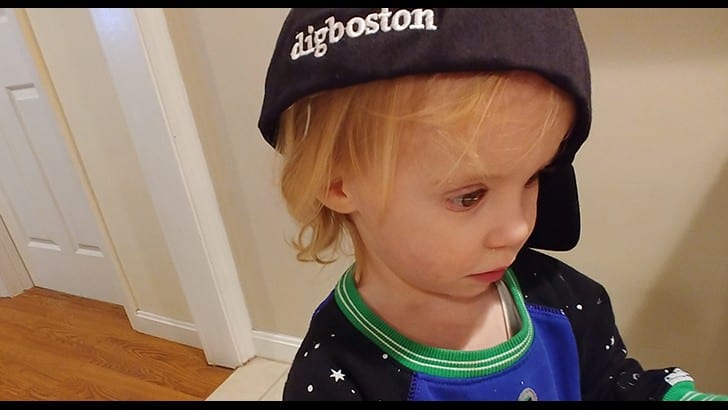
Official Dig Baby


A reader’s guide to building a better news weekly


April 19, 2018

BY JASON PRAMAS @JASONPRAMAS


What does it mean to support a news outlet? Clearly the answer to that question varies widely depending on whether the outlet is big or small, nonprofit or for profit, subscription- or advertising-based.


But in an era when news organizations of all sizes are having a great deal of difficulty keeping their doors open, it’s an important one to consider.


For DigBoston, the answer to that question must be based on how we organize our operation. As we’ve said in past editorials, our organization is very porous to the world around us. We don’t cut ourselves off from the communities we serve. Quite the reverse. We’re always working to connect more strongly to those communities. To serve them better.


In fact, we are part of many Boston-area communities. You can view our staff, freelance talent, interns, contractors, and advertisers as a network of personal networks—all of which pay close attention to the news we produce together. Everyone in this primary network then connects to the broad spectrum of local communities that make up our overall audience.


The better a job we do as journalists, the more that audience becomes part of our primary network—becomes, in short, directly connected to us.


The more that happens, the better our news is. Because people who know us personally, naturally come to trust us. We then hear about community developments faster and faster, and the information we communicate gets concomitantly more accurate and more relevant.


So to support DigBoston, the most important thing that you can do as an audience member is to reach out to us the way we’re reaching out to you. To become part of our primary network.


And here are eight ways you can do that.


Read the paper

This seems like the most obvious suggestion, but it is not. Because reading us doesn’t mean reading us every now and then. It means actively looking for us every week. Making it a habit to check out every issue we produce… and making Dig a part of your life, and therefore more strongly part of the culture that makes our city unique. Which is easy enough to do—especially for people living in and around Boston. We typically start putting new articles online on digboston.com every Tuesday, and our print edition hits the stands in Boston, Cambridge, Somerville, and busy parts of Brookline on Thursdays.


Show it to your friends

Don’t keep us to yourself. Pass around our articles on email and social media. And, more importantly, keep a paper copy on hand and physically pass it around to friends and family. Remember that stuff about networks above? By reading us often and sharing our work with your personal network, you’re helping build a fan base that interacts more strongly with us over the long term. Which is a recipe for ensuring DigBoston continues to produce good journalism for many years to come.


Use our information

We like it when we make people think about issues of the day. That’s definitely part of why we do what we do. But we love it when people act on the news we put out. If we write about a concert or play or art show, go check it out. If we introduce you to a political activist campaign that you agree with, plug in. Get involved. There’s little point in outlets like DigBoston producing news if no one acts on the stories we report.


Talk to us

We say this regularly, but we’ll say it again: You like one of our articles? Don’t like one? A fan of one of our writers, photographers, or artists? Drop us a line. Say hi. It might take us a day or three to get back to you, but we do our best to talk to readers that want to talk to us. For most purposes, emailing us at editorial@digboston.com is the best way to connect.


Frequent our advertisers

Another seemingly obvious thing, but we make the money that enables us to put out our newsweekly through advertising. And what’s the best way to keep the ad money flowing? Giving your business to institutions that advertise with us. And making it known that you heard about them from DigBoston. Know a similar enterprise? Spread the word that we’re a great place to advertise and that we’re helping a number of industries grow locally. Consider yourself part of our sales force. Like seriously, because we’re actually hiring a salesperson. Interested in selling for us? Send us a resume and cover letter by email to jobs@digboston.com.


Advertise with us

Are you a decision maker who’s looking to drum up business in Boston? Then how about buying an ad? You can start with a four- to six-week run, see how your campaign does, and if you’re happy then make it a long-term contract. Drop us an email to sales@digboston.com to get started. Mention that you read this editorial, and we’ll give you a nice discount. Because of course we will.


Donate

Donate?! Yeah, we know it’s kind of counterintuitive. A for-profit company asking for donations through crowdfunding or at least simple, unobtrusive pop-ups on the new website we’re building this year. But even large news outlets like the Guardian are doing it. Because news production is expensive and profit margins for newspapers like DigBoston are razor-thin. We put out a fine product every week with a handful of (shall we say) modestly paid regular staffers and dozens of “stringers” (freelancers). No one is making big bucks. We’re all doing it because we believe in the importance of good community journalism to the democratic society we’re trying to help save. If you’d like to see us expanding our news operation and bringing you more and more news you can’t find anywhere else, definitely toss us a few bucks when we ask for it. Because donations help us pay for the kind of longer-form hard news that a weekly paper like ours couldn’t afford to produce regularly without some extra cash.


Give us credit

This one applies to a very specific subset of our audience. We understand our role in the metro news ecology includes acting as an early warning system for larger outlets like the Boston Globe. But that doesn’t mean we think it’s cool when our colleagues at the “bigs” get “inspired” by our work and basically replicate it without granting us the simple courtesy of listing us as a source. We may kick such outlets around from time to time on political and journalistic grounds, but we still mention them as sources all the time. Some reciprocity would be nice. For real.


So that’s our list. What’s the takeaway? It’s not “data” or “algorithms” or certainly not robots that are going to keep journalism relevant in 21st-century America.


It’s people. Working together to make sure that DigBoston, and other news outlets like us all over the nation, can keep doing what we’re doing… in the public interest.


And it all starts with each of you, taking the time to read our work. Every week.


Thank you.


Jason Pramas is executive editor and associate publisher of DigBoston.

New Liberation News Service Radio – November 13, 1992

Photo of NLNS poster in DigBoston Office. Copyright 2017 Jason Pramas.


New Liberation News Service Radio – November 13, 1992. Presented by Jason Pramas, NLNS founder and editor. A segment on No Censorship Radio, produced and hosted by David Goodman, broadcast on WMBR-FM In Cambridge, MA, USA. Part of a brief experiment reading news articles from the New Liberation News Service wire. CC-BY-NC-SA Jason Pramas.


TOWNIE EXTRA: YASER MURTAJA, PRESENTE!

Cartoon by Mike Flugennock

The killers of the Palestinian journalist must be brought to justice


April 11, 2018

BY JASON PRAMAS @JASONPRAMAS


Typically, I mainly focus on Bay State issues in this column. But I’ll make an exception this time and stand with my colleagues at the International Federation of Journalists (IFJ) and their affiliate the Palestinian Journalists’ Syndicate (PJS) to protest the killing of Palestinian photojournalist Yaser Murtaja by the Israel Defense Forces (IDF) in the strongest possible terms, and to demand that his killers be brought to justice. I encourage all working journalists and editors to do the same.


Murtaja was shot Friday by an IDF sniper near the border of the Gaza Strip and Israel, according to the Guardian. He had been covering one of an ongoing series of Palestinian protests demanding their right of return from Gaza to their families’ ancestral homes in Israel—from which they were driven in the 1947–1948 Civil War in Mandatory Palestine and the 1948 Arab–Israeli War. He was wearing a flak jacket clearly marked “PRESS” in English in huge block letters. According to the press rights group Reporters Without Borders, he was 31, the father of a young son, and one of the founders of the independent news agency Ain Media (“Eye Media”).


Based in the Gaza Strip, Murtaja was never able to travel anywhere else even once. Largely because of the difficulties created by the longstanding Israeli military blockade of the territory.


The IDF has promised to investigate the killing and the wounding of four other Palestinian journalists the same day, according to the Intercept. Regardless, calls are rising from the global human rights community to charge Israel with war crimes over the use of live ammunition on the “Great Return March” demonstrations. Starting with the 15 unarmed protesters killed and hundreds wounded by IDF snipers at a March 30 border rally of 50,000 Gazans. Followed by nine more killed—including Murtaja—and hundreds more wounded at last Friday’s action, according to Haaretz. Plus more deaths and woundings at other border demonstrations. Fatou Bensouda, prosecutor of the International Criminal Court, issued a statement on Sunday saying the court is considering opening an investigation into both the Israeli actions and the possible use of Gaza civilians as “human shields” by Hamas’ military brigades.


The Gaza border demonstrations are expected to continue until May 15—known as Nakba Day (Day of the Catastrophe) to the Palestinians, the commemoration of the ethnic cleansing of their land that took place before and after the Declaration of the Establishment of the State of Israel on May 14, 1948.


According to the IFJ, “In a statement, the PJS confirmed that they will pursue action against Murtaja’s murderers in the international forums and courts and that they will intensify their efforts to bring the murderers of Palestinian journalists to international justice. The PJS also called on the UN and all its bodies’ to act immediately and to implement its decisions, specifically the [UN] Security Council’s decision no. 2222, and to take concrete steps to provide immediate protection to Palestinian journalists on the ground.”


For up-to-date information on the campaigns to hold Israel accountable on this and related matters, check out the websites of the International Federation of Journalists, Reporters Without Borders, and the Committee to Protect Journalists.


And read the main 4.11.18 TOWNIE column AIRLINES SUING, UMASS SCREWING here.


Townie (a worm’s eye view of the Mass power structure) is syndicated by the Boston Institute for Nonprofit Journalism. Jason Pramas is BINJ’s network director, and executive editor and associate publisher of DigBoston. Copyright 2018 Jason Pramas. Licensed for use by the Boston Institute for Nonprofit Journalism and media outlets in its network.

TOWNIE: AIRLINES SUING, UMASS SCREWING

TOWNIE: AIRLINES SUING, UMASS SCREWING


Corporate attack on workers rights and a corporate-style attack on UMB by UMA


April 11, 2018

BY JASON PRAMAS @JASONPRAMAS


If there’s one thing I think people should do every day, it’s read the business press. Because that’s where you see how the world runs. A world that naturally includes Massachusetts.


Airlines sue Mass over sick time law

Case in point, Airlines for America—a coalition that includes JetBlue Airways, United Airlines, American Airlines, and several other carriers, according to the Boston Globe business section—sued Mass Attorney General Maura Healey last week over a 2015 law that guarantees sick leave to many Bay State workers. Including airline employees. “Now surely,” you’re all doubtless thinking, “an industry that wouldn’t exist were it not for decades of massive government subsidies couldn’t possibly consider doing anything that might hurt its workers by attacking a government program that helps them.” But no, the airlines are totally doing that. It’s what big corporations always do to their workers. Along with endless union busting.


According to the Mass.gov Earned Sick Time page, the law states that most workers “in Massachusetts have the right to earn and use up to 40 hours of job-protected sick time per year to take care of themselves and certain family members. Workers must earn at least one hour of earned sick leave for every 30 hours worked.” It further states that employers “with 11 or more employees must provide paid sick time. Employers with fewer than 11 employees must provide earned sick time, but it does not need to be paid.” Employers can “ask for a doctor’s note or other documentation only in limited circumstances.”


The airlines are basically trying to argue—in the fashion of sadly deceased comic Phil Hartman in the role of Unfrozen Caveman Lawyer—that the Mass sick time law “frightens and confuses” them. And that with all the billions of dollars they either gouge out of travelers or simply have the federal government hand them whenever they cry poverty, they can’t possibly figure out how to sync up all their various state, national, and international sick time laws they’ve already handled for decades with the Commonwealth’s more decent law. Despite, you know, computers.


Bottom line, they want an exemption from the law to make slightly bigger profits and escape regulation, and they’re suing Healey to get their way. Claiming it’s unconstitutional and shouldn’t apply to airlines. The same thing they did in Washington State in February, according to the Seattle Times.


The AG should have fun with this one. But readers can give her a hand by calling up the airlines and their front group and telling them to stop attacking the Commonwealth’s sick leave program.


UMass Boston suffers more cuts while UMass Amherst buys Mount Ida College

A couple of related developments in the UMass system over the last several days. First, UMass Amherst is buying the private Mount Ida College in Newton for $37 million, according to WBUR. It plans to use the campus as a base for Boston-area internships and co-ops for its students. The school will also assume Mount Ida’s debt of up to $70 million.


The situation is widely viewed as an unfortunate attack on UMass Boston turf by the more “elite,” better-funded, and melanin-challenged UMass Amherst. With UMB faculty, staff, and students; higher ed experts; and the editorial boards of publications from the Boston Globe to the Lowell Sun asking why it’s necessary for UMA to spend big money on a separate suburban campus to connect its students to Boston. Especially given that there’s already the perfectly good but woefully underfunded UMass Boston campus in the city itself. Which could certainly use an injection of tens of millions of dollars from any source of late.


Speaking of which, second, UMass Boston is slashing the budget of 17 of its research centers by $1.5 million, including the famed veteran-focused William Joiner Institute for the Study of War and Social Consequences, as part of its attempt to get out from under the $30 million in mostly new construction-related deficit it’s been saddled with by a state government that insists on running its colleges like individual businesses. Rather than branches of a single statewide public service.


It’s worth mentioning, as I do on a regular basis, that we need to move the state and nation to the kind of fully public higher education system that many other countries have. Which spends sufficient tax money to guarantee every US resident a K-20 education. And tells private schools like Harvard that they can only remain private if they stop taking public money.


That’s the only way we’re going to stop this kind of spectacle. Where two parts of the same state public university system—one, Amherst, that primarily serves middle-class white suburban students, and one, Boston, that primarily serves working-class urban students of color—work at cross-purposes to one another. Amherst with a larger budget, and Boston with a smaller one. Separate and unequal.


For the moment, readers can help out by joining me in signing the petition to save the William Joiner Institute at change.org. And those so inclined can protest the Mount Ida College sale to UMass Amherst at the Board of Higher Education meeting on April 24. But I think critical calls and emails to UMass President Marty Meehan will likely be most effective. You can find his contact page on the massachusetts.edu website.


Check out TOWNIE EXTRA: YASER MURTAJA, PRESENTE! here.


Townie (a worm’s eye view of the Mass power structure) is syndicated by the Boston Institute for Nonprofit Journalism. Jason Pramas is BINJ’s network director, and executive editor and associate publisher of DigBoston. Copyright 2018 Jason Pramas. Licensed for use by the Boston Institute for Nonprofit Journalism and media outlets in its network.