Skip to content

global warming

EDITORIAL: DIGBOSTON JOINS MOVEMENT TO SLOW GLOBAL WARMING

Earth held up by a human hand in space


Calls for regional consortium of news outlets to improve and expand climate change coverage


Last month, during the fearsome heat wave that saw Boston temperatures soar to 98 degrees Fahrenheit for two days in a row, 400 chickens died in New Hampshire.


According to the Boston Globe, they succumbed to “heatstroke at Vernon Family Farm in Newfields, N.H., around 5 p.m. Saturday when the temperature peaked and the farm could not save them…” The article went on to explain that temperatures got up to 90 degrees in Newfields that day. But chickens cannot take heat over 106 degrees. And, despite the best efforts of the farm staff to keep them cool, the birds expired. 


A New Hampshire Union Leader article provided more detail. Farm owner Jeremiah Vernon said that the heat index (a measure of how hot it really feels when relative humidity is factored in with the actual air temperature) on his farm just after 5 p.m. on July 20 when the chickens died was over 110 degrees—and added that another southern NH farm lost 300 chickens the same day. He also mentioned that “the farm has spent about $2,000 to buy generators and circulation fans to help prevent illness in the event of another summer heat wave.” Something he had obviously never had to consider over the farm’s previous 10 years of operation. Several of which were each the hottest years on record in turn worldwide.


As 2018 was. And 2019 may be. June was the hottest month on record. And then July was, too. Global average temperatures are continuing to climb. Month by month. Year by year. There is some fluctuation. Some cooler months and years. But only cooler relative to the ever-hotter new normal. The general trend is upward. And the speed of that climb is accelerating.


Even so, the death of hundreds of chickens from overheating was an unusual enough occurrence to be worth reporting in major New England newspapers. But apparently not alarming enough to mention the role that global warming is playing in increasing the number and severity of hot days summer by summer. Despite happening in the same month that the Union of Concerned Scientists issued a report, “Killer Heat in the United States: Climate Choices and the Future of Dangerously Hot Days.” Which used the best available scientific data to make the following predictions for New Hampshire:


Historically, there have been three days per year on average with a heat index above 90 degrees Fahrenheit. This would increase to 23 days per year on average by midcentury and 49 by the century’s end. Limiting warming to 2 degrees Celsius [3.6 degrees Fahrenheit] above pre-industrial levels could reduce the frequency of such days to 17 per year on average.


By the end of the century, an estimated 970,000 people would be exposed to a heat index above 90 degrees Fahrenheit for the equivalent of two months or more per year. By limiting warming to 2 degrees Celsius, all residents would avoid such days of extreme conditions. 


Historically, there have been zero days per year on average with a heat index above 100 degrees Fahrenheit. This would increase to six days per year on average by midcentury and 19 by the century’s end. Of the cities with a population of 50,000 or more in the state, Dover and Nashua would experience the highest frequency of these days. Limiting warming to 2 degrees Celsius above pre-industrial levels would cap the frequency of such days at two per year on average.


Both the Globe and the Union Leader wrote articles highlighting the report’s findings, to their credit. But neither article echoed the Union of Concerned Scientists’ oft-repeated point that only limiting temperature rise 2 degrees Celsius above pre-industrial levels can prevent such calamitous outcomes. And neither publication mentioned global warming as a likely causal factor in the death of the chickens—given that the heat index got up to 110 degrees Fahrenheit the day the doomed birds perished—in their coverage of that story. Even though the UCS report states that the historic average number of days with a heat index over 100 in New Hampshire is “zero.”


This year there was at least one such day. So that isn’t normal. And although it’s difficult to peg particular weather events to global warming, it is thus definitely worth mentioning the strong possibility of a connection in this case. For a very good reason beyond the importance of keeping the societal discussion of global warming going hereabouts: The birds’ deaths add to a growing mountain of evidence that global warming is already beginning to threaten food production. 


Like it or not, chickens are an important part of our food supply. But increasingly severe weather caused by a swiftly-heating planet is triggering major floods, major droughts, devastating wind storms, vast wildfires, and the spread of once-tropical insects and diseases—all of which harm crops and food animals, and put our future food security at risk. As sea level rise is starting to impinge on growing lands in low-lying areas. Making the NH chickens the equivalent of canaries in a coal mine when it comes to warning us of the looming danger to planetary food supplies—and highlighting a major problem with allowing average temperatures to continue spiraling skyward.


However, the planet is not getting hotter on its own. It is heating up because governments and major corporations are allowing the amount of carbon that human civilization is burning in the form of oil, gas, and coal to continue to increase. Putting more and more carbon dioxide—the main greenhouse gas—into the atmosphere every year. Despite those same governments and corporations paying lip service to the importance of decreasing the amount of carbon we burn. While the scientific consensus is now agreeing that the only way for our civilization—and perhaps humanity itself—to survive the rolling apocalypse that is human-induced global warming is to bring the net amount of carbon emissions (after somehow deploying carbon capture technologies on an industrial scale) to zero by 2030. A mere decade hence.


Yet in June, Bloomberg reported that “Global carbon emissions jumped the most in seven years in 2018 as energy demand surged, according to BP’s annual review of world energy…” So even huge climate criminal multinationals are aware that carbon emissions have continued to climb unabated—except for a short period after the 2008 financial collapse when manufacturing and transport slowed for a time across the globe.


All of which is to say that journalists need to do a much better job of covering global warming and its many dangerous effects. Too many stories like the sad premature death of the NH chickens do relate to climate change. But that critical angle too often goes unmentioned. And people then go about their daily lives thinking that global warming is something that will only affect humans in the far future or not at all.


WBUR just ran an interesting story on a network of major news outlets in Florida—a traditionally conservative state gradually coming to a political consensus that climate change is real—that have committed to collaborative coverage of the very obvious and constant effects of global warming in that low-lying subtropical farm state. Reporters and editors at those operations have decided that it’s their responsibility to work together to give this most dangerous of crises the constant attention it deserves.


And that’s clearly something that we need to do here in New England. 


Especially in the Bay State, where the Union of Concerned Scientists projections are even more dire: “Historically, the heat index has topped 90 degrees in Massachusetts seven days a year, on average.” But if there is no global action to significantly lower carbon emissions, that number would increase to “an average of 33 days per year by mid-century and 62 by century’s end.” Furthermore, the Commonwealth “currently averages no days when the heat index tops 100 degrees,” but without changes to global emissions that figure would rise to “10 days by mid-century and 26 days by century’s end.”


So I’m writing to commit DigBoston to three things.


First, this publication is going on record in joining the environmental movement aimed at slowing human-induced global warming—stopping it no longer being possible. My colleagues and I accept the overwhelming scientific consensus that climate change is a terminal threat to Earth’s biosphere and to our species. 


Second, we will strive to run more and better coverage of global warming in our own pages. And we will do everything we can to provide regular information on ways people can join together to build the movement to mitigate it.


Third, we are declaring our desire to help start a consortium of news outlets interested in working collectively to improve and expand coverage of global warming in New England. Alternatively, we will happily join an existing effort along those lines, should one we’re unaware of be underway.


Environmental journalists interested in writing for us—and environmental activists and organizations that wish to submit op-eds—are invited to email Chris Faraone and me with pitches at editorial@digboston.com


And editors, publishers, and producers of news outlets interested in starting talks aimed at creating a reporting consortium on global warming in New England are strongly encouraged to contact us at the same email address.


We’re all overdue to take such steps. But journalists in the northeastern US can help change a lot more hearts and minds about the need to make slowing climate change a societal priority, if we work together. 


Jason Pramas is executive editor and associate publisher of DigBoston.

MORE DEMOCRACY NEEDED TO SURVIVE GLOBAL WARMING

  Or: Free the Wu Train   The hits just keep on coming from climate scientists—as they drop big global warming studies with increasing regularity. Fielding data and projections that […]

ON THE IMPORTANCE OF POLITICAL ACTIVISM IN AN AGE OF EXISTENTIAL THREATS

  This week, a reminder that politics is not a spectator sport. I was listening to a recent Noam Chomsky appearance on the Ralph Nader Radio Hour. And the two […]

2019: WE HAVE 11 YEARS TO DO THE IMPOSSIBLE

  In last week’s column looking back at “2018: The Year in Global Warming,”  I reviewed the dire threat posed to humanity and our environment by climate change, and concluded […]

2018: THE YEAR IN GLOBAL WARMING

  “We are the first generation to fully understand climate change and the last generation to be able to do something about it.” —Petteri Taalas, secretary-general, World Meteorological Organization   […]

BOSTON FIDDLES WHILE THE WORLD BURNS

City government continues issuing reports while UN calls for immediate action


October 24, 2018

BY JASON PRAMAS @JASONPRAMAS


When writing about human-induced global warming on a regular basis, it’s a good idea to pace oneself. Because it’s such a relentlessly depressing topic that highlighting it too often can backfire. Faced with an existential threat of such magnitude that human civilization—and perhaps the human race itself—may well be doomed, people have a tendency to just tune out. Figuring that “we may indeed be doomed, but not just yet.” Which reflects a serious misunderstanding of how doom works. And more importantly, neglects to factor in how the avoidance of thinking about approaching doom makes its swift arrival all the more certain. By cultivating inaction, when immediate and militant action is called for.


Be that as it may, there are times when journalists like myself cannot just let a notable happening pass without comment. And Mayor Marty Walsh’s global warming-related press conference of last week was certainly such a one.


In keeping with previous junkets on the same theme, Walsh rehearsed yet another version of the same report he’s been trotting out for the last couple of years. This time entitled “Resilient Boston Harbor.” Where the fashionable foundation buzzword “resilient” stands in for “doing the cheapest, least effective thing possible.” Since like previous versions the report:

1) doesn’t propose binding regulation to force the corporations responsible for the lion’s share of carbon emissions in Boston to do what is necessary to make the city carbon neutral by its target date of 2050

2) continues to use lower estimates for threats like sea level rise and ever-increasing air temperature rather than higher credible estimates when planning city responses, and

3) doesn’t set hard timetables for actually building the limited defensive measures it does call for… measures that basically assume that efforts to make Boston—and every significant polity on the planet—carbon-neutral will fail.


Most everything the city might do to achieve carbon neutrality and adapt to the negative effects of global warming—beyond generating more reports—is conveniently pushed off to a time well after the Walsh administration is likely to be out of office.


Worse still, the new Boston paper got released just days after a devastating new Intergovernmental Panel on Climate Change report was published by the United Nations—which says if governments worldwide haven’t made their nations carbon-neutral by 2040, then humanity has no hope of limiting global warming to 1.5 degrees celsius. Meaning that we’re on track for the far worse scenarios of 2 degrees celsius of warming and above… that IPCC report authors say will be much more destructive to multiple planetary systems than previously anticipated. Making Boston’s current plans even more inadequate than they already are.


In fact, the only mention of completed (or nearly completed) climate remediation efforts in the press release for the “Resilient Boston Harbor” report is a brief passage indicating that “a deployable floodwall system has been installed across the East Boston Greenway, and a section of Main Street in Charlestown is being elevated.” And most every proposed initiative in the report itself is still in the planning stages. Lots of nice drawings of all the stuff that hasn’t been built yet, though.


However, according to the Boston Herald, there was one bright spot the day of the mayor’s presser when “a group of East Boston residents stormed City Hall Plaza, demanding that he hear their concerns about Eversource’s proposal to put a substation near Chelsea Creek.”


It seems that the local environmental justice group GreenRoots has been trying to meet with Walsh for about a year to attempt to stop regional power utility Eversource Energy from building the structure. To no avail.


A petition to Walsh being circulated by the group on Change.org on the matter makes it clear why: The high-voltage substation is slated to be built in an area around Chelsea Creek (a.k.a. Chelsea River) that’s flooding more and more frequently because of global warming-induced sea level rise. When Hurricane Sandy hit New York City in 2012, a similar station was flooded—causing it to explode and burn. A bad enough outcome in the best of circumstances.


But the Chelsea Creek substation will be located very close to storage tanks holding over eight million gallons of jet fuel for nearby Logan Airport. Should those be ignited by such an explosion, the effect on surrounding neighborhoods would be catastrophic. In both human and environmental terms.


The GreenRoots petition concludes: “We find it odd that your office has pushed for many sustainability initiatives concerning the Creek when this project isn’t compatible with this vision.” The initiatives include measures meant to reduce flooding from sea level rise on Chelsea Creek by “connecting high points near Boardman Street and Eagle Street,” according to the city’s 2016 Climate Ready Boston report. Although that is not mentioned in the latest report.


The Herald reported that Walsh’s office responded with a brief statement: “‘The substation in East Boston will better support East Boston’s growing population and facilities, including the city’s investments in a new police station, ambulance bay and a public works facility,’ adding that the city worked with Eversource to choose the site.”


The mayor has not yet agreed to meet with GreenRoots. Yet he really should. Because how is the public supposed to take any of his administration’s global warming remediation initiatives seriously when he’s still playing politics as usual with a major energy distribution corporation for a project that could have profound negative environmental effects?


“The city worked with Eversource to choose the site,” the city statement says. Lovely. But how much did it work with the East Boston community? And the grassroots environmental advocacy group working there and in neighboring Chelsea? Beyond the dog-and-pony shows necessary to put the barest sheen of democracy on the “Climate Ready Boston” process of which the “Resilient Boston Harbor” report is part? Not much at all, apparently. Basically Eversource wants the substation at Chelsea Creek. And it’s going to get what it wants in the current corporate-dominated political moment.


If Walsh is willing to kowtow to that big company on an issue of such serious environmental import, then why should anyone expect him to put the kind of political pressure necessary on other major Boston-area corporations that will be needed to make the city carbon-neutral and better prepared for global warming-induced disaster by 2050? Let alone 2040.


This is the guy who never saw a huge city government giveaway to major companies like General Electric during his tenure in office that he wouldn’t support. What could possibly make him change his modus operandi for conducting business as usual? Which is “give the corporations whatever they ask for—big tax breaks, free services, and public funds—and try to get a few crumbs for working families around the edges of any ‘deals’ thus cut.”


The obvious answer is that concerted grassroots political action will be required to pressure Walsh and politicians like him the world over to do the right thing consistently on the global warming front. Which is a herculean task, if attempted in one go.


But rather than take on the world’s global warming emergency all at once, Boston-area readers can send a message to Walsh that the old politics will not stand if he wants to remain in the mayor’s office—by signing the GreenRoots petition and getting involved in the fight to stop the Eversource substation from being built in environmentally sensitive Chelsea Creek.


Then folks can plug into the growing number of local battles to bring environmentally destructive natural gas utilities like National Grid and Columbia Gas to heel.


And along the way, a political movement may coalesce that can force Boston city government to take stronger long-term action to stop all activities that add carbon dioxide to the atmosphere—while saving the city from global warming-induced sea level rise and the many other deleterious effects of climate change that have already begun at our current 1 degree celsius average air temperature increase planetwide since the dawn of the industrial era.


But human society had best not take too long with such activist baby steps. Because the IPCC report is quite clear: If we have not taken giant leaps toward global carbon neutrality by 2030—only 12 years from now—then there will be no hope of stopping warming at the Paris Climate Agreement’s “aspirational target” of 1.5 degrees celsius by 2040.


If we can’t do that, then cities like Boston will have bigger crises to worry about than “just” accelerating sea level rise and ever-higher average air temperature. We will have stepped off the ecological precipice… and our doom will be upon us.


Apparent Horizon—winner of the Association of Alternative Newsmedia’s 2018 Best Political Column award—is syndicated by the Boston Institute for Nonprofit Journalism. Jason Pramas is BINJ’s network director, and executive editor and associate publisher of DigBoston. Copyright 2018 Jason Pramas. Licensed for use by the Boston Institute for Nonprofit Journalism and media outlets in its network.
THE MERRIMACK VALLEY DISASTER: IT’S NOT JUST ABOUT OLD PIPES

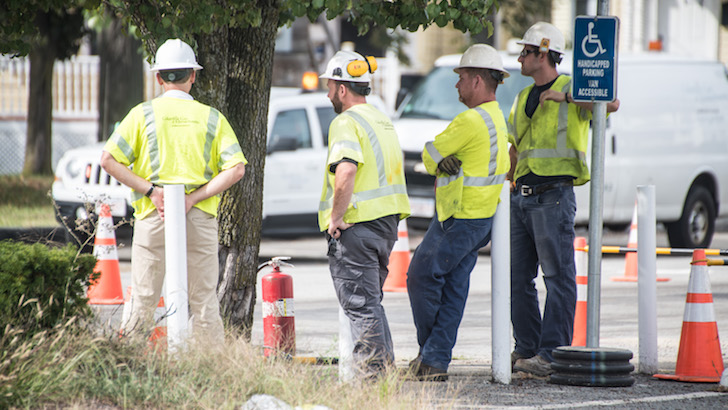
Photo by Derek Kouyoumjian


September 18, 2018

BY JASON PRAMAS @JASONPRAMAS


The events of last week in the Merrimack Valley were unfortunate by any measure. Something bad happened to the natural gas distribution system in parts of Lawrence, North Andover, and Andover that resulted in dozens of homes being damaged or destroyed by explosions and fire, at least 25 people getting injured, and one person (tragically, an 18-year-old) getting killed. The leading theory for the conflagration is that it was triggered by a pressure spike in area gas pipes. But until the National Transportation and Safety Board concludes its investigation—which could take up to two years—we likely won’t know the cause of that spike. According to ThinkProgress, the Mass Department of Public Utilities will be conducting its own investigation, and Attorney General Maura Healey will oversee that effort to ensure transparency.


The company responsible, Columbia Gas of Massachusetts—a division of NiSource Inc. of Indiana—was so slow to respond to the crisis that Gov. Charlie Baker put Eversource Energy in charge of the cleanup effort.


But the magnitude of the disaster is just starting to sink in. About 8,500 homes were affected, and its occupants are being told that it will take months to replace the cast iron gas pipes under city streets and restore service. Pipes so old, and so prone to rusting, leaking, and failure, that the federal Pipeline and Hazardous Materials Safety Administration started pushing gas utilities nationwide to replace them over a decade ago, according to USA Today. Yet despite being allowed to recoup such costs—which run about $1 million a mile—from their customers, utilities like Columbia have been slow to complete the needed work. Meanwhile, the thousands of residents that officials have allowed to return to their homes are forced to stay in apartments and houses that use gas for heating and cooking… with the gas shut off for the foreseeable future. As winter approaches.


This highlights the danger of using methane, an obviously flammable and explosive gas, as a fuel source for homes and businesses. Notwithstanding being in continuous use at millions of sites in the United States for well over 150 years, “natural” gas is not as safe as many people believe. According to the New York Times, “Since 1998, at least 646 serious gas distribution episodes have occurred across the country, causing 221 deaths and leaving nearly a thousand people injured. …” And the reasons for such episodes are not always found.


Perhaps it could not be otherwise, since America has allowed private companies to control the production and distribution of natural gas from the industry’s beginnings. Sure, we call those companies “public utilities” and tell ourselves that federal and state government regulate them. But, like all corporations answering to the siren call of the market, gas companies exist to make profits for their shareholders. To the exclusion of all other considerations—be they health, safety, environmental, or economic. Even though the small local gas companies of the 1800s have long since merged to become large and powerful combines, and even though they are allowed to be monopolies in the areas they control, they continue trying to save money on costs and make as much profit as regulators allow. Often quite a lot, since the phenomenon of “regulatory capture”—where a revolving door sending top staff back and forth between utilities and regulatory agencies generally assures that utilities have fat bottom lines—continues unabated. Including here in the Bay State. Whether utilities provide good service or bad.


Which is why National Grid—another one of the seven companies that have gas monopolies in parts of Massachusetts—is getting away with locking out 1,200 union gas workers who are trying to get a better contract for the difficult and dangerous work they do day in and day out. And why Columbia, which has already been dinged for recent safety issues in the regions of the Commonwealth gas infrastructure under its control, according to the Boston Globe, was allowed to continue business as usual until the Merrimack Valley fires brought international attention to the consequences of its malfeasance. Leading WGBH’s Jim Braude to wonder aloud on the Sept 17 episode of Greater Boston what would have happened if the gas network in Lawrence, North Andover, and Andover had been owned by National Grid. A company currently trying to service its infrastructure with ill-trained scab labor—some of them managers with little or no field experience. The better to bust the labor unions that protect the livelihoods of its workers, and permanently replace them with un-unionized workers that will make its stockholders even bigger profits.


If all these developments were taking place in a period where there were no demonstrable environmental consequences for burning fossil fuels like natural gas, they would be dire enough. But, unfortunately, that is not the case. True, burning methane as an energy source only produces about half as much carbon dioxide as burning coal, according to the Union of Concerned Scientists. However, there are so many methane leaks in the production and distribution of both oil and gas that any relative advantage to the environment that burning it provides is mostly erased, according to a Washington Post article on a key study in the journal Science. Given that methane is a much stronger greenhouse gas than carbon dioxide. So even the 2.3 percent of methane estimated to be leaking away into the atmosphere before it can be burned is enough to ruin its oft-hyped potential as a more “green” fossil fuel source that can be leaned on for decades while carbon neutral energy sources like solar are brought online on an industrial scale. Not because we don’t have the technology to do so faster, but because energy multinationals don’t want clean energy systems deployed until they’ve made all the money they can make by burning carbon.


Worse still, more than half of the natural gas being used in the Greater Boston area is now coming from fracked gas, according to Boston University earth and environment professor Nathan Phillips in a BU Today article. Fracking (more correctly, hydraulic fracturing) is an incredibly destructive and ecologically disastrous method of squeezing oil and natural gas out of vast underground shelves of shale rock by injecting massive amounts of water and any number of often-toxic liquid chemicals into them. Direct environmental impacts include ground, water, air, and noise pollution in those areas unfortunate enough to have lots of shale. And the technique has even been known to trigger earthquakes. Phillips also explains that fracked methane contains many impurities that may be making consumers sick. But the indirect impacts are far more problematic because fracked gas and oil have flooded the planet’s fossil fuel markets with cheap product at exactly the time we need to move away from burning carbon.


In a better world, the Merrimack Valley disaster would be a clarion call to move more decisively toward clean energy alternatives—at least in the affected communities as a useful demonstration project. In advance of doing so swiftly across the country, and in every corner of the globe. But we are not in that world. We’re in a world where energy corporations control the politics of the US and many other countries to their own advantage. And they want to ensure that humanity squeezes every last possible joule of energy out of fossil fuels like natural gas before allowing alternatives to finally become the dominant mode of energy production. Regardless of the fact that doing so will very likely result in a planet that’s unable to sustain advanced human civilization, and perhaps unable to sustain human life at all. If the worst global warming scenarios are allowed to become reality.


That’s why I have repeatedly called—most recently in a column about Eversource, the utility called upon to “fix” the Merrimack Valley crisis—for bringing energy companies to heel on both the environmental and economic fronts by winning the huge political struggles necessary to make them all genuinely public utilities. With a mission to provide cheap, clean, green energy like advanced wind, solar, and hydroelectric (ideally not from environmentally destructive mega-dams) power to America, and phase out all fossil fuel production, distribution, and usage as soon as possible. If we could accomplish that sea change in our energy system, other countries would be likely to follow at speed. And we might actually stand a chance of minimizing the damage from global warming, already on display with increasingly alarming frequency in the form of catastrophic storms like Hurricane Florence and Typhoon Mangkhut.


So if you want to help the Merrimack Valley disaster victims, certainly donate to the best local charities you can find. But also join environmental groups like Mass Sierra Club, Resist the Pipeline, and HEET (Home Energy Efficiency Team) that are working to end the ability of privately owned energy utilities to harm communities like Lawrence in particular and our planet’s ecosphere in general going forward. Furthermore, be sure to make your house, condo, or apartment as energy efficient you can and do whatever you can do to convert your dwelling from reliance on burning fossil fuel to using genuinely clean energy sources. Every little improvement helps. Just remember, we won’t really be able to ensure our survival as a species until the fossil fuel megacorps are stopped. Cold.


Apparent Horizon—winner of the Association of Alternative Newsmedia’s 2018 Best Political Column award—is syndicated by the Boston Institute for Nonprofit Journalism. Jason Pramas is BINJ’s network director, and executive editor and associate publisher of DigBoston. Copyright 2018 Jason Pramas. Licensed for use by the Boston Institute for Nonprofit Journalism and media outlets in its network.
SOME THOUGHTS ON TRANSPORTATION POLICY

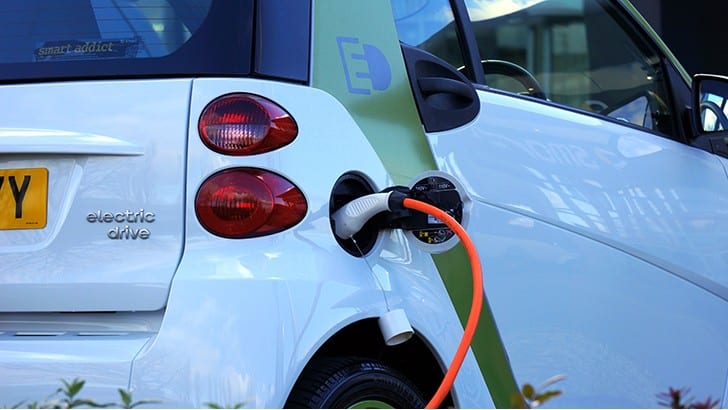
Image courtesy of pxhere.com. Creative Commons CC0 Public Domain.


August 16, 2018

BY JASON PRAMAS @JASONPRAMAS


Transportation is a subject I address frequently in my columns. But, as is often the case in journalism, it’s usually necessary to write about it piecemeal given various editorial constraints. So I might cover flooding subways one week and a gonzo proposal for sky gondolas over the Seaport the next. But rarely do I have the luxury of looking at such a major policy area in its entirety. Which is nonideal because a good journalist is always interested to spark discussion and debate—and it’s difficult to have a proper conversation with readers if they aren’t aware of my general views on the topic at hand.


Such was the case a three weeks ago when I published a piece that took a dim view of Bird Rides dumping its dangerous electric rental scooters all over Cambridge and Somerville without first discussing the move with officials in either city… following a nationwide pattern of flouting relevant laws that is clearly its business model. About a day later, a few wags took to Twitter to slam me for having the temerity to suggest that motorized skateboards with handlebars might not be the ideal vehicles to allow on area streets in numbers. On both political and safety grounds.


I didn’t mind the hazing, of course. But it was vexing to watch Bird fans that clearly hadn’t even bothered to read the article in question—let alone my broad and deep back catalog—attack me as some kind of car-loving anti-environmental reactionary in the service of flogging their hipster transportation fetish du jour. Be they paid marketers or merely geeks with an idée fixe.


With that in mind, I thought it would be useful to run through my general views on transportation policy in this epistle. To clarify why I don’t think that any electric conveyance thrown at us by sociopathic West Coast frat boy CEOs is automatically the best way to save the planet while safely getting people around town with their groceries and pets. I will, however, leave long-distance intercity travel by land, sea, and air aside for now for the sake of space.


Carbon

It’s not possible to hold forth on transportation without first addressing the absolute necessity that humanity stop burning carbon to meet our civilization’s power needs. If we fail to shift from getting power from oil, gas, and coal to clean renewable energy sources like wind, water, and solar, then we are well and truly doomed. Not in centuries, but mere decades from now. Among the largest sources for global warming inducing carbon emissions are cars, trucks, and motorcycles. And with carbon multinationals like ExxonMobil dominating American politics, it’s going to be extremely difficult to institute the major changes that will be required to replace those vehicles—and the “car culture” that has built up around them—with zero carbon alternatives that will be acceptable to a broad array of communities. Yet without such a transition, anything else we might do will merely be tacking colorful bunting onto our species’ collective coffin. That said, any decent transportation network will have to be based on electricity. Unless some of our cleverer scientists and engineers come up with sufficiently powerful and portable renewable power sources (tiny cold fusion reactors, harnessing evil spinning gnomes, etc.) that don’t require plugging vehicles into charging stations for periods of time every day or three.


Planning

We’re not going to be able to move millions of people to new green transportation alternatives without redesigning the places where they live and work. One appealing way of doing that over time is to build dense clusters of housing and offices around major multimodal transportation hubs that are connected to each other by mass transit. Which will, among other salutary effects, help solve the “last mile” problem of getting commuters from such hubs to their homes and workplaces in weather conditions that are only going to get more unpredictable and dangerous as climate change accelerates.


But while it’s become fashionable and profitable for developers to build such high-density enclaves for rich people, it is generally not being undertaken for everyone else. Until it is, it’s going to be extremely difficult to successfully introduce the transportation alternatives we need. Probably the toughest issue will be converting existing urban neighborhoods and suburban tracts based on square miles of individual atomized domiciles over to sort of more compact and connected urblets without upending people’s carefully constructed lifeways by government fiat. Though, ironically, the global warming-driven imperative of our moving entire cities like Boston away from flooding lowlands onto higher ground—and eventually northward to cooler climes—will provide us an opportunity to start development from scratch in many locales. Since given the choice between staying in aging housing stock with ever worsening service and transportation options, and moving to new clusters of high-rise and low-rise buildings hooked up to a robust grid, people will likely move of their own accord.


Alternatives

And what are the cheaper, ubiquitous, and more efficient transportation modalities that will get us to a carbon-free future? I think trains, trolleys, monorails, and similar mass transit options will still play a vital role in moving large numbers of people from neighborhood to neighborhood and city to city. In fact, I believe we need to massively expand rail lines to reach far out into the exurbs. And figure out ways to use such lines for cargo containers as well. Buses—with dedicated lanes—will remain vital in many areas. Especially where it’s too expensive or impractical to build out rail lines. Boats can also be very useful for the same purpose in most weather conditions in areas adjacent to oceans, lakes, and rivers.


And cars? Well, that’s a big complicated discussion, but here’s my brief take. Carbon-burning cars need to be relegated to museums and antiquarian societies for collectors and hobbyists. But there’s no getting around fact that despite all their myriad problems, most people currently like being able to jump into a car and go where they want to go. So what can replace that? At first, shifting over to electric cars will be a big help. Then there will be a debate over robot cars. And that’s a tricky one because that technology won’t work well at first, and will displace many driving jobs if not introduced deliberately without corporate malice aforethought. Don’t be surprised, therefore, if you see me attacking “public-private” initiatives to shove such cars down people’s throats.


Nevertheless, society will gain much if we can make the new technology work. Because fleets of robot cars can likely replace the individually owned car entirely. Allowing people to get between areas well away from major transportation hubs at will—simply by using the future equivalent of a rideshare app to order a robot car for the trip. Robot trucks will be able to deal with moving cargo point to point. And simple electric golf carts—either robotic or not—will suffice for trips around neighborhoods.


We can then gradually reduce or eliminate motor vehicle traffic from many roads over time—allowing bicycles (on ubiquitous dedicated bike lanes) to really come into their own. As for electric scooters? In most locales it will probably be best if they remain an idiosyncratic vehicle choice for young individuals who like to stand out from the crowd, and not accepted as a serious transportation alternative. Because they’re not. Meanwhile, flying cars, jetpacks, and the like will have to be a topic for a future article.


Labor

Building out transportation alternatives needs to be seen as an opportunity for new job creation, not just an excuse for job destruction for the purpose of corporate profit extraction. Such jobs should be “good jobs” with living wages, shorter work weeks (something we’ll need worldwide to compensate for the rise of the robots), and generous benefits. People losing jobs in the existing transportation sector should be retrained at government expense and get priority placement in jobs in the new transportation sector. All of said jobs should be unionized.


Public

As many of these transportation alternatives as possible should be public. Leaving our transit future to private companies like Uber, Lyft, Lime, Bird Rides, etc. is a prescription for disaster. Because all such corporations look out for their bottom lines first, and the public good second (if at all). And every entrant to that new sector has sought to end-run public planning processes and government regulators in a never-ending quest to make a fast buck—to the point of Uber purposely designing their payment algorithm so that their drivers would keep driving while making as little money as possible, according to Vanity Fair.


So if we’re going to ensure that commuters have a voice in a reasonably democratic and rational transportation planning process going forward, then we have to expand public transportation to control the commanding heights of its sector. And regardless, the role of privately owned vehicles must be minimized if we’re going to reduce carbon emissions enough to save ourselves from the worst depredations of human-induced global warming.


That’s my basic thinking on at least regional transportation. Happy to participate in civic dialogues on the subject any time.


Thanks to Suren Moodliar, co-author of the forthcoming A People’s Guide to Greater Boston [University of California Press], for ongoing ever-illuminating conversations on transportation, housing, and many other policy areas.


Apparent Horizon—winner of the Association of Alternative Newsmedia’s 2018 Best Political Column award—is syndicated by the Boston Institute for Nonprofit Journalism. Jason Pramas is BINJ’s network director, and executive editor and associate publisher of DigBoston. Copyright 2018 Jason Pramas. Licensed for use by the Boston Institute for Nonprofit Journalism and media outlets in its network.