“We are the first generation to fully understand climate change and the last generation to be able to do something about it.” —Petteri Taalas, secretary-general, World Meteorological Organization Given all the developments I could review from the year that’s now drawing to a close—and given that I primarily write for a Greater Boston […]
Jason Pramas
A Home in the Digital World
politics
FAIR HOUSING WHACKED: TUFTS STUDENTS FIGHT ADMIN PROPOSAL TO ESTABLISH “CLASSIST” DORM SYSTEM
December 5, 2018 BY JASON PRAMAS @JASONPRAMAS More than 200 Tufts University students, faculty, and allies from surrounding communities held a march and demonstration last week to protest a new campus housing policy, according to the Boston Herald. Over the summer, the Tufts administration announced that its annual lottery system for on-campus housing […]
GROSS POINTS BLANK: BOSTON’S TOP COP SHOULD THINK TWICE BEFORE BASHING THE ACLU

November 27, 2018
BY JASON PRAMAS @JASONPRAMAS
BPD Commissioner William Gross has had a bad few days. Last week, ACLU Massachusetts sued the city of Boston for using “a system—nicknamed the ‘gang packet’—which awards points for choice of clothes and social media selfies, and [is] used to designate ‘gang affiliation’ without any accompanying allegations of criminal activity,” according a Guardian article by DigBoston contributing writer Sarah Betancourt.
In response, Gross had a meltdown on his personal Facebook account—accusing the ACLU of being “paper warriors” who “turn a blind eye to ‘atrocities,’” according to the Boston Herald.
His attack was weak. And it was off the wall. He said that the civil liberties organization was nowhere to be found when the BPD has done tough stuff like working in East Boston and El Salvador to find ways to bring the international MS-13 gang to heel. He then said that ACLU did not have the “‘common decency’ to call with condolences after a city cop was shot in the face.”
“No ACLU when officers are shot. No ACLU when we help,” Gross continued.
ACLU Mass Executive Director Carol Rose then fired back the following statement, also in the Herald:
Commissioner Gross’ accusations appear to be nothing more than an attempt to divert attention from the serious issues raised by an ACLU lawsuit that seeks to uncover whether the Boston Police Department is unfairly and arbitrarily targeting people of color. … In order to make Boston a safe city for all its residents, we must meaningfully address discriminatory policing, and confront the role the gang database plays in the lives of young Black and Latinx people in our city.
Naturally, I’m going to side with the ACLU on this one.
Because, first, civil liberties lawyers are civil liberties lawyers and cops are cops. So, right away, Gross is off base in attacking the ACLU for doing its job. Which is to defend civil rights for all American citizens and immigrants to these shores. Including putative gang members. No surprise he’s doing that, though. When faced with a serious critique, it makes sense that he finds it easier to toss red meat to the “Blue Lives Matter”/“cops can do no wrong” crowd than to try to refute ACLU claims head on. Because he knows it’s going to be tough to win such a debate. Especially after the ACLU demonstrated that BPD PR about its being a kinder, gentler praetorian guard was less than truthful in a landmark 2015 report that “found racial disparities in the BPD’s stops-and-frisks that could not be explained by crime or other non-race factors.” Something local police, and their commissioner most of all, cannot have forgotten.
Second, cops are public servants and government employees. It’s therefore up to government officials to issue formal condolences when police officers get injured or killed in the line of duty. Which officials like Mayor Marty Walsh—who publicly supported Gross as this article went to press—do all the time. Private citizens like ACLU staff can send their best wishes at such times or not. It’s neither required nor expected of them.
Third, the fact that ACLU observers may be present where police are working, something that particularly irked Gross, is no surprise at all. They’re doing their jobs—which sometimes involves watching cops to make sure they’re not violating anyone’s civil liberties. While the cops are doing theirs—which all too often does result in civil liberties violations. Like tarring someone as a gang member in a database based on super sketchy criteria. And then trying to pretend that it’s no big deal.
Finally, if Commissioner Gross wants to trash the ACLU on such ludicrous grounds, then he has to accept that other people—like this journalist—are going to come back at him with facts.
For example, the fact that police cannot defeat gangs. Especially in the black and Latino/a communities under discussion in this dustup. Even assuming they want to. Which is not a good assumption, since a primary rationale for the outsized police budgets of this era is the threat of gang violence.
Cops can’t stop gangs because myriad problems lead to their formation. Problems that sociologists and anthropologists and psychologists have studied exhaustively for over 100 years. Problems of family. Problems of intergenerational networks. Problems of communication. Problems of geography. Problems of education. Problems of substance abuse. Problems of incarceration. And worst of all, the problems of structural racism and entrenched economic inequality.
Racism and poverty. Problems that at their heart are problems of capitalism. A political economic system based on economic inequality… and, in these United States, on structural racism. A system propped up by increasingly militarized police forces. Whose job, before all other jobs, is to protect the rich and powerful. And to repress the poor and marginalized. For fear they should rise up and demand a better deal. As they have done on numerous occasions in American history.
So, maybe Commissioner Gross should think twice before taking cheap shots at an organization whose only “failing” is trying to protect disenfranchised communities from the very police who claim they are there to do the same thing.
Because he may find that the conversation moves in a direction that he doesn’t like.
Apparent Horizon—winner of the Association of Alternative Newsmedia’s 2018 Best Political Column award—is syndicated by the Boston Institute for Nonprofit Journalism. Jason Pramas is BINJ’s network director, and executive editor and associate publisher of DigBoston. Copyright 2018 Jason Pramas. Licensed for use by the Boston Institute for Nonprofit Journalism and media outlets in its network.
A GOOD SEASON TO BE A GOOD HUMAN BEING

And keep it up through the hard times to come
November 21, 2018
BY JASON PRAMAS @JASONPRAMAS
It’s Thanksgiving this week. More correctly the National Day of Mourning. A holiday fraught with contradiction, as I’ve written repeatedly in the past. And what is one to make of it? Originally an opportunity for the descendants of the European colonists who seized Massachusetts—the country it eventually sat within, and the continent that surrounds it—from Native American nations through a combination of deadly diseases, grand theft, and genocidal violence to celebrate their good fortune. Now one of a number of nearly indistinguishable chances throughout the calendar year for (most, not all) people to take a day off from work, eat too much food (often prepared courtesy of women’s unpaid labor), drink too much alcohol, watch sports on TV, and maybe catch up with friends and extended family in the margins somewhere.
Once a harvest festival inaugurated by a Christian theocracy, it has morphed into a secular affair. Though its nationalist overtones remain strong. Nevertheless, it kicks off a period of the year—however commercialized—where people are encouraged to think about other people. To talk to each other, and to give each other gifts.
So, Turkey Day is as messed up as the warmongering capitalist republic it celebrates. But it does bring out some good behavior in Americans that I believe should be encouraged. An attitude that continues through to another secularized Christian holiday, Christmas, and beyond to a hopeful and libidinous New Year’s Eve.
Which is why it’s a fine time of year to make a few suggestions of things readers can do to make the world a better place. Whether you’re religious or not, and regardless of your politics… or lack thereof.
Help Someone Less Fortunate Than Yourself
I’m talking on an individual level here. One on one. You’re walking down the street. You see a homeless person. You see a hand being held out in supplication. So, give that person some money. Some food. Some coffee. Whatever they need in the moment. Look that person in the eye. Talk to that person. That fellow human being in need in front of you. A person you may have passed by a dozen times without raising your gaze from the sidewalk. Maybe ask a question or two. Think about the circumstances that resulted in that person ending up on the street. Then reflect upon how you might help build a society that will not allow anyone to lose their home to begin with.
Volunteer
Now help a bunch of people. For a couple hours a week or a couple hours a month. Donate your time, labor, and experience. Give a workshop at a local school on something you’re passionate about. Work in a homeless shelter. Build a community garden. Visit with folks in a nursing home. After a fashion, mull over how much can be done outside a system of market transactions. Look for ways to network volunteer efforts together into a front for social betterment.
Donate to Charity
Finding a nonprofit organization that really does the good work it says it does can be tricky. So, ask around. Check the news media for background. Go to the website of any organization that looks decent and read some of the group’s materials. Your basic litmus test should be whether the charity in question spends most of the money it raises in the service of its chosen community of interest. Groups that do that are generally worthy of your support. Donate annually… or, and I say this as someone who runs a nonprofit alongside a commercial newspaper, donate monthly. Keep it up as long as you can. And if you can afford it, give to many solid organizations. Set a percentage of your income to devote to good works and give that sum consistently. Note the power of giving, and think about how to expand the gift economy to become the dominant mode of exchange.
Day of Service
Too late a plan for this year, but in the years to come try converting your Thanksgiving from just party time into a time to both party and help others. Tell your friends and family that you’re going to spend part of the day helping people in need in your community, and invite them to come along. Over time, this could become a tradition. And the more personal networks that do it, the more the idea will catch on. Not that such a service day is a new notion. But it is something that could stand to be spread nationwide. Perhaps supplanting the current majority view of the holiday at some point. Inspiring many people to make such activities part of daily life—and ultimately baking them into our culture.
In closing, I make these suggestions for what I consider to be obvious moral reasons. But also for reasons as political as anything I’ve ever written. Because we’re entering what may well be the most difficult period that the human race has ever faced. And if our species is going to survive and thrive in the decades to come, it will be thanks to simple human solidarity. Based on the kind of actions I suggest above at base.
And if humanity is going to stop genocides like the one that was committed against Native Americans—and far too many other groups of people since—from ever happening again, such solidarity is not optional. It is essential.
Apparent Horizon—winner of the Association of Alternative Newsmedia’s 2018 Best Political Column award—is syndicated by the Boston Institute for Nonprofit Journalism. Jason Pramas is BINJ’s network director, and executive editor and associate publisher of DigBoston. Copyright 2018 Jason Pramas. Licensed for use by the Boston Institute for Nonprofit Journalism and media outlets in its network.
QUESTION 1: THE ROAD NOT TRAVELLED

A broader appeal could have resulted in a win for nurses and patients
November 14, 2018
BY JASON PRAMAS @JASONPRAMAS
There was no way I was going to criticize Question 1, prosaically dubbed the Nurse-Patient Assignment Limits Initiative, in advance of Election Day. As a longtime labor advocate, I didn’t think it would be appropriate to publicly gainsay a decent union, the Mass Nurses Association (MNA). Even though I thought that its ballot campaign was a strategic miscalculation. But now that the election’s over and the PR dust around the effort is settling, I think it’s important to say something on the matter. Because I hate to see popular organizations I like make political moves that I view to be avoidable mistakes. And I really want the labor movement to go from strength to strength in this difficult era for working people. Not get crushed at the polls.
The referendum question, for those of you who need a refresher, aimed to mandate specific staff-to-patient ratios for registered nurses in the Bay State so that RNs would have fewer patients to care for on each shift in most situations. The aim of the initiative was to reduce overwork for RNs and improve patient care. Certainly laudable goals. And ones that the MNA and other advocates have been fighting to reach for years, according to the union’s own literature. In the course of that struggle, the MNA had tried to win better staffing ratios at the contract bargaining table, and in the regulatory and legislative arenas. All with limited success.
Finally, they decided to take the issue to the voters. A sensible step… when the other efforts didn’t bring the desired results.
But Question 1 was resoundingly defeated—with 70.38 percent voting against, and only 29.62 percent in favor. When just a couple of months ago, it looked like the union position might prevail. So I think it’s worth looking at why the initiative failed.
It’s certainly true that one reason for the outcome was that the hospital industry had significantly deeper pockets than the MNA and its allies. But only by a factor of two-to-one. Which is not terrible for this kind of David v. Goliath fight. According to Ballotpedia, the labor-backed Committee to Ensure Safe Patient Care raised over $11 million ($10 million plus of that sum from the MNA) to the hospital industry-supported Coalition to Protect Patient Safety’s $26 million ($25 million of that total coming from the Massachusetts Health and Hospital Association).
If Question 1 co-author 1199SEIU—a larger healthcare workers’ union—had not chosen to remain neutral on the question it helped draft, perhaps there would have been funding parity between the two sides. Yet even without the extra money and troops SEIU would have brought with it, the MNA put an impressive organizing campaign on the ground.
So I don’t think money’s the main factor behind the strong no vote on the MNA ballot effort.
I think the big problem with Question 1 was that it took a policy wonk approach that appeared to benefit a relatively small group of workers if passed. Rather than a rights-based approach that could have demanded direct benefits for a demonstrably larger community. Namely patients. A group that includes literally everyone in the state at one time or another.
So, as written, the referendum question appeared to mainly benefit registered nurses. And that is where the MNA and allies immediately ran into trouble. There aren’t that many RNs. According to the Mass Board of Registration in Nursing, there were 130,048 RN licensees in 2018. Which it says includes 12,112 active advanced practice registered nurses (APRNs)—mainly nurse practitioners with master’s degrees.
If we subtract the APRNs, we’re left with nearly 120,000 RNs of various types out of a total workforce of over 3,500,000. Or about 3.4 percent of Massachusetts workers. A significant group. But not a major group like, again, all the once-and-future patients in the state.
MNA definitely tried to target the political campaign around their initiative on benefits to patient safety. The difficulty the union faced there was that the language of Question 1 was quite obviously framed more around what was good for RNs than what was good for patients. Even its committee name pointed to “safe patient care”—wording aimed at nurses—while the hospital industry committee name directly mentioned “patient safety.” In a situation where the ballot campaign’s opposition seemingly put the interest of the much larger community of patients front and center while the MNA didn’t, the union lost control of its own narrative. Which probably resulted in the one group that should have backed the question strongly—RNs—being almost evenly split (48 percent for, 45 percent against) on it by the time of the vote, according to a poll by WBUR.
The nurses’ union also tried to make a yes vote on its initiative sound like a great struggle for the labor movement as a whole. Yet here again, it was hamstrung by the narrow language of its referendum question. MNA and other advocates strove mightily to show that a vote for Question 1 was a vote for all workers. But once people sympathetic to labor and the working class in general read the question, what did they see?
The question didn’t seek to expand workers’ power in any broad way. It didn’t try to expand patients’ rights, although it could have potentially improved their care. And it didn’t expand the rights of any other stakeholder communities.
Mostly what people saw was a question that would raise costs for hospitals and only help one group of healthcare workers—registered nurses. Not orderlies, not techs, not LPNs, not physical therapists, not respiratory therapists, not nutritionists, not speech therapists, not physician assistants, not pharmacists, and certainly not doctors.
Add to those problems the fact that Question 1 was too long—the summary presented on voters’ ballots was twice the length of either of the other two questions at 626 words—and too technical (using inside baseball language like “[t]he proposed law would also require every covered facility to develop a written patient acuity tool for each unit to evaluate the condition of each patient”), and it seems pretty clear in hindsight that the effort was doomed from the start. Matching the hospital industry dollar for dollar likely wouldn’t have changed the outcome enough for the MNA to win.
I’m writing this brief analysis to make sure that similar future efforts take such issues into account in advance. And that labor advocates choosing to embark upon referendum campaigns going forward make sure that they are rights-based and expand power for major communities of interest.
That is the path to victory for grassroots political campaigns of any type. Most especially ones aimed at expanding rights for working people and other currently disenfranchised groups.
Apparent Horizon—winner of the Association of Alternative Newsmedia’s 2018 Best Political Column award—is syndicated by the Boston Institute for Nonprofit Journalism. Jason Pramas is BINJ’s network director, and executive editor and associate publisher of DigBoston. Copyright 2018 Jason Pramas. Licensed for use by the Boston Institute for Nonprofit Journalism and media outlets in its network.
AFTER PITTSBURGH: HOW WE DEFEAT THE HARD RIGHT
![Photo by Brad Fagan (IMG_0119) [CC BY-SA 2.0 (https://creativecommons.org/licenses/by-sa/2.0)], via Wikimedia Commons](https://digboston.com/wp-content/uploads/2018/10/Boston_2017_Womens_MarchIMG_0119_32389345611-1024x683.jpg)
October 31, 2018
BY JASON PRAMAS @JASONPRAMAS
In August 2017, over 40,000 Bostonians marched on Boston Common to tell a small gaggle of nearly incoherent hard-right louts that they were not welcome in our city. Especially in the wake of a white supremacist rally in Charlottesville, Virginia, that resulted in the murder of a left-wing counterdemonstrator by a young Nazi. At the time, I was concerned that by drawing too much attention to the tiny affair, protestors risked giving the local hard right more power than they deserved—and helping them grow their numbers in the process. But I understood why so many people reacted so viscerally to it, and supported their decision to call what turned out to be one of the largest political actions of any kind in Hub history against it.
With Saturday’s slaughter of 11 older parishioners at a Jewish house of worship in Pittsburgh by a heavily armed, raving anti-Semite—literally screaming for the death of all Jews—we’re not precisely entering a new era. After all, we’ve seen a number of mass shootings by the same kind of white guy in the brief period since Boston’s big protest against hate. Including the killing of two African-Americans in a Louisville, Kentucky Kroger supermarket just three days before the Steel City incident. But events are starting to look increasingly similar to the dawn of an earlier era. The Nazi era. And any moderately well-educated adult that failed to hear the shattering glass of Kristallnacht in the bullet casings that hit the floor of the Tree of Life synagogue as the killer pumped lead into the bodies of innocents has learned precisely nothing from history.
So, I think it would have been appropriate for Bostonians from all walks of life to call an even larger rally this week than last year’s to take up an old slogan, “Never Again,” in memory of the honored dead of Pittsburgh. And to put all latter-day Nazis, fascists, and white supremacists on warning that we will not allow them to take control of Boston, or Massachusetts, or the United States.
However, the Red Sox won the World Series the day after the attack. Making it less likely that the kind of rally we need—a show of force that would inspire people around the nation—will happen here in this critical moment.
Which is a pity. Since this is one killing spree that we can absolutely blame President Donald Trump for instigating with his disgusting and completely fallacious attacks on the caravan of asylum-seeking refugees fleeing government persecution in countries like Honduras and poverty in general.
As Adam Serwer put it in an excellent Atlantic piece (“Trump’s Caravan Hysteria Led to This”), “The Tree of Life shooter criticized Trump for not being racist or anti-Semitic enough. But with respect to the caravan, the shooter merely followed the logic of the president and his allies: He was willing to do whatever was necessary to prevent an ‘invasion’ of Latinos planned by perfidious Jews, a treasonous attempt to seek ‘the destruction of American society and culture.’
“The apparent spark for the worst anti-Semitic massacre in American history was a racist hoax inflamed by a U.S. president seeking to help his party win a midterm election.”
So Trump needs to pay a political price for his propagandizing in the service of increasing the right-wing turnout on the sixth of November. And a lot of big protest rallies—perhaps galvanized by a successful Boston action—right before one of the most important elections in decades would have gone a long way toward exacting that price where it hurts him the most.
But it was not to be this time around. Which is OK. As there is a lot more that people of good conscience can do to deflect the rise of the hard right before they become strong enough to take more direct and long-term control of significant American political institutions… and start legally murdering their opponents in great numbers. Because if there’s one attribute that Nazis and fascists and white supremacists have in common, it’s a thirst for the blood of their many enemies. As such, they must be defeated politically—and defeated definitively—by people from across the compassionate political spectrum to forestall that possibility from ever becoming a reality. While they are still a small force relative to the population.
Before I continue, though, let me just lay out a couple of ideas that are important to any discussion of defeating the hard right.
First, the perpetrators of the recent wave of deadly attacks on African-Americans and now Jews (and other targeted groups) aren’t crazy. Sure, they have psychiatric issues. Lots of people do. But they’re generally quite clear about what they’re doing and why. And they are not lone nuts. They are soldiers. Even if they’re not members of a hard-right organization.
Second, the attacks these killers are carrying out are not random. Even if, as with the recent massacre, some of them seem to be done on the spur of the moment. They are part of a strategy. The killers are not generally the authors of that strategy. Hard-right leaders are. The strategy and the tactics that comprise it are laid out every day across thousands of channels of communication—most obviously social media discussions. The basic directive of the strategy is to attack “soft targets”—unarmed people who are members of groups deemed enemies by Nazis, fascists, and white supremacists. To kill as many of those people as possible. To spread fear in those enemy communities and beyond. And, most importantly, to encourage an armed response from those communities and/or their allies.
Allies like young left-wing activists who sometimes put on on masks and try to defend vulnerable communities. Often called “antifa” rightly or wrongly. And demonized by right-wing pundits up to and including Trump as some kind of massive army ready to undermine the very foundations of our republic. Which is purest fantasy. But absolutely a truism in current right-wing circles… be they hard or soft.
The goal of the strategy is to trigger a civil war. Which the hard right—being armed and trained and having infiltrated the military and many police forces for decades—fully expects to win. Once it’s won, democracy can be replaced with dictatorship. And the bloodbath they so desire can begin.
To stop that strategy from succeeding, the overwhelming majority of Americans and immigrant residents that are not on the hard right must out-organize them politically. And here we arrive at the work that everyone can do. Whatever walk of life you come from. Whatever your background is. Whatever age you are.
Study. If you don’t have a basic grounding in history and politics relevant to the fight at hand, get one. If you’re rusty, brush up. We have lots of great public libraries and bookstores in the Boston area. Use them. Look for works by academics and researchers recognized as experts in their fields. If you need suggestions, ask librarians and bookstore clerks. If you need formal instruction, and you’re not a student, enroll in courses at adult education centers and community colleges. If that’s too expensive—or as an adjunct to coursework—form study groups with friends, read key texts together, and discuss them.
Organize. Either start or join political groups that are committed to democracy, human rights, the rule of law, and tolerance for the broad array of political, economic, religious, social, and cultural views that don’t involve slaughtering other people. If you’re launching one in your community, and you already started a study group, you can build your organization out of that. It’s also great to start chapters of existing organizations. Definitely don’t “reinvent the wheel” unless you have to. Whether you decide to work with an existing political party or start your own is purely up to you. Political groups can do a lot of useful work outside of political parties. You can also both join or start a political party and join or start extraparliamentary political organizations. Just don’t spread yourself too thin.
Educate. You’ve got some knowledge. You’re doing political organizing. Now get out there and talk to as many people as you can. Hold public educational events on important issues of the day. In election years, hold candidate forums and panel discussions on referendum questions. The important thing is that you don’t just do this in neighborhoods already friendly to your core ideas. Go to places that the harder edge of the right wing is known to dominate. Talk up your positions. Spread the word that there is more than one way to think about the world. Also, work with democracy-friendly media outlets (like BINJ and DigBoston). Write opinion pieces for publication. Get on talk shows. Start your own news outlets if necessary. At least a blog and a podcast can be a great start. Use social media judiciously. Build an audience carefully, and encourage its members to join your organization.
Debate. This is key. Constantly engage in debate with the broad right wing. You may not exactly win hearts and minds every time. But you may very well stop run-of-the-mill conservatives from turning into hard-right fanatics. You will also learn more about their ideas in conversation than most anything you could glean from your readings. And you will learn to better express your own ideas through practice under some duress.
Mobilize. Defend and expand democracy through direct political action. Hold rallies, marches, and pickets against the hard right. Don’t let vulnerable communities struggle alone. Join with them. Work with them. Meet the threat of violence with determined nonviolence. Then beat politicians that support the hard right at the ballot box.
Build. Establish small- and large-scale institutions that enshrine democratic values and make them part of everyday life. Social clubs. Sports facilities. Cultural centers. Institutes. For the long haul.
In short, create the more democratic society that you want to live in. Run the hard right to ground with the force of your ideas and the people you mobilize politically. Not with guns. Make it impossible for Nazis, fascists, and white supremacists to find significant audiences for their rhetoric of hate for the foreseeable future. And you will have won.
We will all have won.
NOTE: Since this article went to press, a rally has been called for tomorrow (Thursday, November 1) at 6pm at the New England Holocaust Memorial next to Faneuil Hall. Boston Shiva: Rally Against Antisemitism and White Supremacy. Full info here: https://www.facebook.com/events/330051917546731/. Check it out!
Apparent Horizon—winner of the Association of Alternative Newsmedia’s 2018 Best Political Column award—is syndicated by the Boston Institute for Nonprofit Journalism. Jason Pramas is BINJ’s network director, and executive editor and associate publisher of DigBoston. Copyright 2018 Jason Pramas. Licensed for use by the Boston Institute for Nonprofit Journalism and media outlets in its network.
BOSTON FIDDLES WHILE THE WORLD BURNS

City government continues issuing reports while UN calls for immediate action
October 24, 2018
BY JASON PRAMAS @JASONPRAMAS
When writing about human-induced global warming on a regular basis, it’s a good idea to pace oneself. Because it’s such a relentlessly depressing topic that highlighting it too often can backfire. Faced with an existential threat of such magnitude that human civilization—and perhaps the human race itself—may well be doomed, people have a tendency to just tune out. Figuring that “we may indeed be doomed, but not just yet.” Which reflects a serious misunderstanding of how doom works. And more importantly, neglects to factor in how the avoidance of thinking about approaching doom makes its swift arrival all the more certain. By cultivating inaction, when immediate and militant action is called for.
Be that as it may, there are times when journalists like myself cannot just let a notable happening pass without comment. And Mayor Marty Walsh’s global warming-related press conference of last week was certainly such a one.
In keeping with previous junkets on the same theme, Walsh rehearsed yet another version of the same report he’s been trotting out for the last couple of years. This time entitled “Resilient Boston Harbor.” Where the fashionable foundation buzzword “resilient” stands in for “doing the cheapest, least effective thing possible.” Since like previous versions the report:
1) doesn’t propose binding regulation to force the corporations responsible for the lion’s share of carbon emissions in Boston to do what is necessary to make the city carbon neutral by its target date of 2050
2) continues to use lower estimates for threats like sea level rise and ever-increasing air temperature rather than higher credible estimates when planning city responses, and
3) doesn’t set hard timetables for actually building the limited defensive measures it does call for… measures that basically assume that efforts to make Boston—and every significant polity on the planet—carbon-neutral will fail.
Most everything the city might do to achieve carbon neutrality and adapt to the negative effects of global warming—beyond generating more reports—is conveniently pushed off to a time well after the Walsh administration is likely to be out of office.
Worse still, the new Boston paper got released just days after a devastating new Intergovernmental Panel on Climate Change report was published by the United Nations—which says if governments worldwide haven’t made their nations carbon-neutral by 2040, then humanity has no hope of limiting global warming to 1.5 degrees celsius. Meaning that we’re on track for the far worse scenarios of 2 degrees celsius of warming and above… that IPCC report authors say will be much more destructive to multiple planetary systems than previously anticipated. Making Boston’s current plans even more inadequate than they already are.
In fact, the only mention of completed (or nearly completed) climate remediation efforts in the press release for the “Resilient Boston Harbor” report is a brief passage indicating that “a deployable floodwall system has been installed across the East Boston Greenway, and a section of Main Street in Charlestown is being elevated.” And most every proposed initiative in the report itself is still in the planning stages. Lots of nice drawings of all the stuff that hasn’t been built yet, though.
However, according to the Boston Herald, there was one bright spot the day of the mayor’s presser when “a group of East Boston residents stormed City Hall Plaza, demanding that he hear their concerns about Eversource’s proposal to put a substation near Chelsea Creek.”
It seems that the local environmental justice group GreenRoots has been trying to meet with Walsh for about a year to attempt to stop regional power utility Eversource Energy from building the structure. To no avail.
A petition to Walsh being circulated by the group on Change.org on the matter makes it clear why: The high-voltage substation is slated to be built in an area around Chelsea Creek (a.k.a. Chelsea River) that’s flooding more and more frequently because of global warming-induced sea level rise. When Hurricane Sandy hit New York City in 2012, a similar station was flooded—causing it to explode and burn. A bad enough outcome in the best of circumstances.
But the Chelsea Creek substation will be located very close to storage tanks holding over eight million gallons of jet fuel for nearby Logan Airport. Should those be ignited by such an explosion, the effect on surrounding neighborhoods would be catastrophic. In both human and environmental terms.
The GreenRoots petition concludes: “We find it odd that your office has pushed for many sustainability initiatives concerning the Creek when this project isn’t compatible with this vision.” The initiatives include measures meant to reduce flooding from sea level rise on Chelsea Creek by “connecting high points near Boardman Street and Eagle Street,” according to the city’s 2016 Climate Ready Boston report. Although that is not mentioned in the latest report.
The Herald reported that Walsh’s office responded with a brief statement: “‘The substation in East Boston will better support East Boston’s growing population and facilities, including the city’s investments in a new police station, ambulance bay and a public works facility,’ adding that the city worked with Eversource to choose the site.”
The mayor has not yet agreed to meet with GreenRoots. Yet he really should. Because how is the public supposed to take any of his administration’s global warming remediation initiatives seriously when he’s still playing politics as usual with a major energy distribution corporation for a project that could have profound negative environmental effects?
“The city worked with Eversource to choose the site,” the city statement says. Lovely. But how much did it work with the East Boston community? And the grassroots environmental advocacy group working there and in neighboring Chelsea? Beyond the dog-and-pony shows necessary to put the barest sheen of democracy on the “Climate Ready Boston” process of which the “Resilient Boston Harbor” report is part? Not much at all, apparently. Basically Eversource wants the substation at Chelsea Creek. And it’s going to get what it wants in the current corporate-dominated political moment.
If Walsh is willing to kowtow to that big company on an issue of such serious environmental import, then why should anyone expect him to put the kind of political pressure necessary on other major Boston-area corporations that will be needed to make the city carbon-neutral and better prepared for global warming-induced disaster by 2050? Let alone 2040.
This is the guy who never saw a huge city government giveaway to major companies like General Electric during his tenure in office that he wouldn’t support. What could possibly make him change his modus operandi for conducting business as usual? Which is “give the corporations whatever they ask for—big tax breaks, free services, and public funds—and try to get a few crumbs for working families around the edges of any ‘deals’ thus cut.”
The obvious answer is that concerted grassroots political action will be required to pressure Walsh and politicians like him the world over to do the right thing consistently on the global warming front. Which is a herculean task, if attempted in one go.
But rather than take on the world’s global warming emergency all at once, Boston-area readers can send a message to Walsh that the old politics will not stand if he wants to remain in the mayor’s office—by signing the GreenRoots petition and getting involved in the fight to stop the Eversource substation from being built in environmentally sensitive Chelsea Creek.
Then folks can plug into the growing number of local battles to bring environmentally destructive natural gas utilities like National Grid and Columbia Gas to heel.
And along the way, a political movement may coalesce that can force Boston city government to take stronger long-term action to stop all activities that add carbon dioxide to the atmosphere—while saving the city from global warming-induced sea level rise and the many other deleterious effects of climate change that have already begun at our current 1 degree celsius average air temperature increase planetwide since the dawn of the industrial era.
But human society had best not take too long with such activist baby steps. Because the IPCC report is quite clear: If we have not taken giant leaps toward global carbon neutrality by 2030—only 12 years from now—then there will be no hope of stopping warming at the Paris Climate Agreement’s “aspirational target” of 1.5 degrees celsius by 2040.
If we can’t do that, then cities like Boston will have bigger crises to worry about than “just” accelerating sea level rise and ever-higher average air temperature. We will have stepped off the ecological precipice… and our doom will be upon us.
Apparent Horizon—winner of the Association of Alternative Newsmedia’s 2018 Best Political Column award—is syndicated by the Boston Institute for Nonprofit Journalism. Jason Pramas is BINJ’s network director, and executive editor and associate publisher of DigBoston. Copyright 2018 Jason Pramas. Licensed for use by the Boston Institute for Nonprofit Journalism and media outlets in its network.
THE MERRIMACK VALLEY DISASTER: IT’S NOT JUST ABOUT OLD PIPES
September 18, 2018
BY JASON PRAMAS @JASONPRAMAS
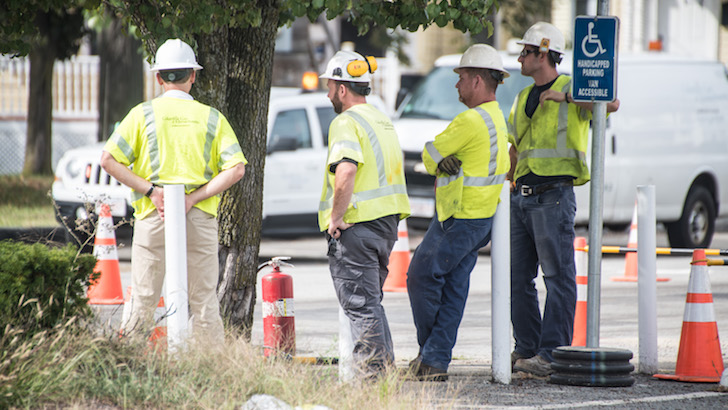
The events of last week in the Merrimack Valley were unfortunate by any measure. Something bad happened to the natural gas distribution system in parts of Lawrence, North Andover, and Andover that resulted in dozens of homes being damaged or destroyed by explosions and fire, at least 25 people getting injured, and one person (tragically, an 18-year-old) getting killed. The leading theory for the conflagration is that it was triggered by a pressure spike in area gas pipes. But until the National Transportation and Safety Board concludes its investigation—which could take up to two years—we likely won’t know the cause of that spike. According to ThinkProgress, the Mass Department of Public Utilities will be conducting its own investigation, and Attorney General Maura Healey will oversee that effort to ensure transparency.
The company responsible, Columbia Gas of Massachusetts—a division of NiSource Inc. of Indiana—was so slow to respond to the crisis that Gov. Charlie Baker put Eversource Energy in charge of the cleanup effort.
But the magnitude of the disaster is just starting to sink in. About 8,500 homes were affected, and its occupants are being told that it will take months to replace the cast iron gas pipes under city streets and restore service. Pipes so old, and so prone to rusting, leaking, and failure, that the federal Pipeline and Hazardous Materials Safety Administration started pushing gas utilities nationwide to replace them over a decade ago, according to USA Today. Yet despite being allowed to recoup such costs—which run about $1 million a mile—from their customers, utilities like Columbia have been slow to complete the needed work. Meanwhile, the thousands of residents that officials have allowed to return to their homes are forced to stay in apartments and houses that use gas for heating and cooking… with the gas shut off for the foreseeable future. As winter approaches.
This highlights the danger of using methane, an obviously flammable and explosive gas, as a fuel source for homes and businesses. Notwithstanding being in continuous use at millions of sites in the United States for well over 150 years, “natural” gas is not as safe as many people believe. According to the New York Times, “Since 1998, at least 646 serious gas distribution episodes have occurred across the country, causing 221 deaths and leaving nearly a thousand people injured. …” And the reasons for such episodes are not always found.
Perhaps it could not be otherwise, since America has allowed private companies to control the production and distribution of natural gas from the industry’s beginnings. Sure, we call those companies “public utilities” and tell ourselves that federal and state government regulate them. But, like all corporations answering to the siren call of the market, gas companies exist to make profits for their shareholders. To the exclusion of all other considerations—be they health, safety, environmental, or economic. Even though the small local gas companies of the 1800s have long since merged to become large and powerful combines, and even though they are allowed to be monopolies in the areas they control, they continue trying to save money on costs and make as much profit as regulators allow. Often quite a lot, since the phenomenon of “regulatory capture”—where a revolving door sending top staff back and forth between utilities and regulatory agencies generally assures that utilities have fat bottom lines—continues unabated. Including here in the Bay State. Whether utilities provide good service or bad.
Which is why National Grid—another one of the seven companies that have gas monopolies in parts of Massachusetts—is getting away with locking out 1,200 union gas workers who are trying to get a better contract for the difficult and dangerous work they do day in and day out. And why Columbia, which has already been dinged for recent safety issues in the regions of the Commonwealth gas infrastructure under its control, according to the Boston Globe, was allowed to continue business as usual until the Merrimack Valley fires brought international attention to the consequences of its malfeasance. Leading WGBH’s Jim Braude to wonder aloud on the Sept 17 episode of Greater Boston what would have happened if the gas network in Lawrence, North Andover, and Andover had been owned by National Grid. A company currently trying to service its infrastructure with ill-trained scab labor—some of them managers with little or no field experience. The better to bust the labor unions that protect the livelihoods of its workers, and permanently replace them with un-unionized workers that will make its stockholders even bigger profits.
If all these developments were taking place in a period where there were no demonstrable environmental consequences for burning fossil fuels like natural gas, they would be dire enough. But, unfortunately, that is not the case. True, burning methane as an energy source only produces about half as much carbon dioxide as burning coal, according to the Union of Concerned Scientists. However, there are so many methane leaks in the production and distribution of both oil and gas that any relative advantage to the environment that burning it provides is mostly erased, according to a Washington Post article on a key study in the journal Science. Given that methane is a much stronger greenhouse gas than carbon dioxide. So even the 2.3 percent of methane estimated to be leaking away into the atmosphere before it can be burned is enough to ruin its oft-hyped potential as a more “green” fossil fuel source that can be leaned on for decades while carbon neutral energy sources like solar are brought online on an industrial scale. Not because we don’t have the technology to do so faster, but because energy multinationals don’t want clean energy systems deployed until they’ve made all the money they can make by burning carbon.
Worse still, more than half of the natural gas being used in the Greater Boston area is now coming from fracked gas, according to Boston University earth and environment professor Nathan Phillips in a BU Today article. Fracking (more correctly, hydraulic fracturing) is an incredibly destructive and ecologically disastrous method of squeezing oil and natural gas out of vast underground shelves of shale rock by injecting massive amounts of water and any number of often-toxic liquid chemicals into them. Direct environmental impacts include ground, water, air, and noise pollution in those areas unfortunate enough to have lots of shale. And the technique has even been known to trigger earthquakes. Phillips also explains that fracked methane contains many impurities that may be making consumers sick. But the indirect impacts are far more problematic because fracked gas and oil have flooded the planet’s fossil fuel markets with cheap product at exactly the time we need to move away from burning carbon.
In a better world, the Merrimack Valley disaster would be a clarion call to move more decisively toward clean energy alternatives—at least in the affected communities as a useful demonstration project. In advance of doing so swiftly across the country, and in every corner of the globe. But we are not in that world. We’re in a world where energy corporations control the politics of the US and many other countries to their own advantage. And they want to ensure that humanity squeezes every last possible joule of energy out of fossil fuels like natural gas before allowing alternatives to finally become the dominant mode of energy production. Regardless of the fact that doing so will very likely result in a planet that’s unable to sustain advanced human civilization, and perhaps unable to sustain human life at all. If the worst global warming scenarios are allowed to become reality.
That’s why I have repeatedly called—most recently in a column about Eversource, the utility called upon to “fix” the Merrimack Valley crisis—for bringing energy companies to heel on both the environmental and economic fronts by winning the huge political struggles necessary to make them all genuinely public utilities. With a mission to provide cheap, clean, green energy like advanced wind, solar, and hydroelectric (ideally not from environmentally destructive mega-dams) power to America, and phase out all fossil fuel production, distribution, and usage as soon as possible. If we could accomplish that sea change in our energy system, other countries would be likely to follow at speed. And we might actually stand a chance of minimizing the damage from global warming, already on display with increasingly alarming frequency in the form of catastrophic storms like Hurricane Florence and Typhoon Mangkhut.
So if you want to help the Merrimack Valley disaster victims, certainly donate to the best local charities you can find. But also join environmental groups like Mass Sierra Club, Resist the Pipeline, and HEET (Home Energy Efficiency Team) that are working to end the ability of privately owned energy utilities to harm communities like Lawrence in particular and our planet’s ecosphere in general going forward. Furthermore, be sure to make your house, condo, or apartment as energy efficient you can and do whatever you can do to convert your dwelling from reliance on burning fossil fuel to using genuinely clean energy sources. Every little improvement helps. Just remember, we won’t really be able to ensure our survival as a species until the fossil fuel megacorps are stopped. Cold.
Apparent Horizon—winner of the Association of Alternative Newsmedia’s 2018 Best Political Column award—is syndicated by the Boston Institute for Nonprofit Journalism. Jason Pramas is BINJ’s network director, and executive editor and associate publisher of DigBoston. Copyright 2018 Jason Pramas. Licensed for use by the Boston Institute for Nonprofit Journalism and media outlets in its network.
VOTING AS A SOCIALIST IS STILL HARD (IN THE MASSACHUSETTS OF 2018)
Plus an endorsement for Michael Capuano for Congress (MA 7th District)
August 28, 2018
BY JASON PRAMAS @JASONPRAMAS
It’s never easy being a socialist in the United States. And at no time is it more difficult then come election season. Because neither of the two major parties—hard-right ravings to the contrary taken as given—is socialist. Both Republicans and Democrats are capitalist. There have been many attempts to form major left-wing anti-capitalist parties over the last couple hundred years. Some, like two I’ve participated in—the Green Party US and the Labor Party—have been national efforts. The former is still struggling on gamely, though Mass affiliate Green-Rainbow Party currently does not have official party status—having failed to win 3 percent of the vote for any state or national candidate in the last election or to enroll 1 percent of registered voters. The latter petered out over a decade back. There have also been state-level efforts like the Peace and Freedom Party in California—which, for one reason or another, haven’t spread to other states.
The received political wisdom is that the major parties have set up so many structural roadblocks over their many decades in power that it’s impossible for any of the smaller so-called third parties to achieve major party status. And from my experience that received wisdom has been correct. So far.
Where does that leave a socialist like me? Well, I have a few options. None of them ideal… unless we manage to change our political system to allow for small parties to more easily become big ones. I could go back to the Greens. I could join one of the tiny socialist parties that runs candidates from time to time like Socialist Alternative. I could join the somewhat larger Democratic Socialists of America—which is not a party but a pressure group that throws its weight behind the most left-wing candidates it can find or field, mainly in the Democratic Party. I could help try to revive an effort for a “fusion” ballot in Massachusetts with the Working Families Party (of New York and several other states). Such a move would create a formation that would be allowed to support larger parties’ candidates (i.e., the Democrats for all intents and purposes) without sacrificing independence. But allowing that would require a change in Bay State law… and a 2006 attempt to make the necessary change failed. I could help start a new left-wing party in the Boston area, and try to win some municipal races before moving on to state and national contests. Or I can join the majority of Massachusetts voters and be an independent. Registering as “unenrolled” in our state’s parlance. Currently the simplest and easiest option. And a reasonable one for a journalist like myself since I remain independent of all political parties.
So like many other left-wingers, I’ve bitten the proverbial bullet and have been unenrolled for most of my adult life. But it’s a dissatisfying place to situate myself politically. Because functionally it means that I’m voting for whoever comes closest to my beliefs on a case-by-case basis. Not usually for a slate. As minor parties like the Greens rarely have the wherewithal to run candidates for multiple offices in one voting district. Just individual candidates. And should those candidates win, they are basically on their own. Meaning any political gains they make typically won’t outlast their terms of office.
Being unenrolled also means that I’m almost never voting for a candidate I fully support. Unless a maverick left-wing candidate happens to run for one office or other in my area—usually in a nonpartisan local race—I’m nearly always forced to compromise. And, sure, voting always involves compromises. Even for dyed-in-the-wool Democrats and Republicans. Yet casting such votes usually requires that I make a big compromise. A fundamental one, as the candidates on offer all share the major flaw of backing a political economic system—capitalism—that I don’t believe in. Even though I’m forced to participate in that system by nature of being born in a capitalist country in this time and place.
At this juncture, some readers will naturally ask, “Well, why vote at all?” After all, I’ve got more than a little bit of a libertarian streak in the sense that I’m a big fan of liberty. And many left libertarian traditions—notably anarcho-syndicalism—push for direct democracy at the local level in place of representative democracy at every level. I’ve always had a soft spot for such views. But I have never found them practical for a nation-state of over 300 million souls amid a planetary population of over seven billion and rising.
Ultimately, as messed up as capitalist democracy is, I refuse to take my franchise for granted. For much of human history, people like me didn’t get any say at all in how they were governed. Even the US restricted voting to white males with property at its inception. Only after generations of grassroots political struggle did we get universal suffrage for everyone 18 or older. So as long as we remain an even nominally representative democracy, I’m going to keep voting.
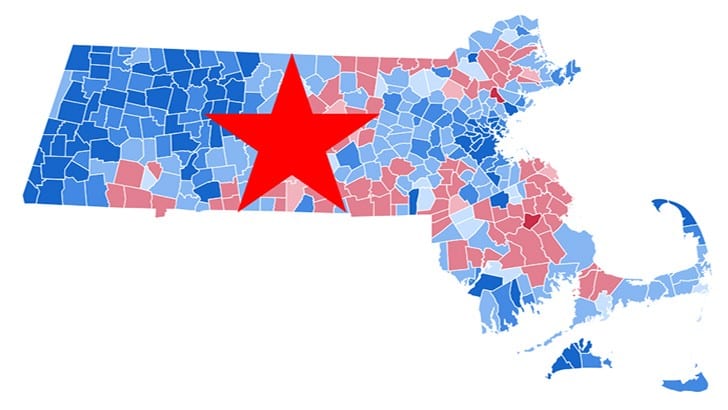
Great, but how do I go about picking candidates to support? Not easily, and I simply don’t vote in races where none of the candidates are good by my lights. Still, taking next week’s primary as an example, let me shed some light on my internal decision-making process. For sake of space, I’ll think aloud about only the hottest current local political fight—the 7th District Congressional race between incumbent Michael Capuano and challenger Ayanna Pressley—in the manner I normally do when preparing to vote as an independent socialist. Mainly by considering the candidates’ political positives and negatives from my perspective.
Capuano’s positive policy points include backing Medicare for All for many years and consistently anti-war foreign policy stands. Strikes against him include taking campaign contributions from the real estate and biotech lobbies. Pressley’s positive points include taking decent positions on issues like housing and immigration—including recent support for abolishing Immigration and Customs Enforcement. Strikes against her include more hawkish foreign policy views. And a long Intercept piece on the race paints her as the chosen candidate of corporate Democratic leadership. Someone who fakes left, but will likely break right when it matters. A big negative in my book.
For me, Capuano is one of the last old line social democrats in Congress. Meaning he’s about as left-wing as he can be without leaving the Dems. He’s also been in office a long time and holds key committee positions that would be lost with the election of a first-term opponent. He’s brought a lot of money to his district that benefits the working class, and he’s taken a lot of stands he didn’t have to take in defense of that class.
Pressley has done much less as a politician thus far. According to Politico, her “biggest projects have ranged from supporting pregnant teens and revamping sex education in schools to expanding liquor licenses in minority neighborhoods.” Admittedly while holding a seat in a political body, the Boston City Council, that has very little power. So not an entirely fair comparison, but food for thought nonetheless. However, given Capuano’s predictable and significant lead in the polls and in funding, I can’t shake the feeling that Pressley’s really doing groundwork for her next big race more than expecting to win this one.
For these reasons and many more besides, I have to back Michael Capuano in the Democratic primary for the 7th District Congressional seat.
But all that said—and there’s much more to say—in backing Capuano, I’m still backing a capitalist. This is not a guy who is pushing for workers to own the means of production. This is a guy who has consciously decided that the best path is to shave the rough edges off of capitalism to make it less harmful to workers. While allowing billionaires to control the commanding heights of our political economic system. He may not like it. But he’s decided that’s the best that can be done under the current circumstances.
I respect that decision, even if I disagree with it. Yet whatever I think about individual candidates, I always have to come back to the same problem: What can I do to help ensure that there is a mass socialist (and anti-racist and feminist and environmental and anti-war, etc., etc.) party that can field candidates with the experience and funding to win enough electoral races to change the face of politics in Massachusetts and the United States for the better?
And my answer? For the moment, I’m writing for a growing audience about the kind of political changes I’d like to see, and looking for opportunities to help build the kind of political party that could bring those changes to fruition. There are seeds of what I’m searching for in Democratic Socialists of America and Socialist Alternative and many other existing socialist and anarchist and green formations besides. But none of them presently fits the bill for me. All I can say is that I’ll know the party I’m looking for when I see it. And jump on board as soon as that happens. But for now, I’ll just muddle through at election time in the fashion I’ve described above. As best I can.
Readers interested in engaging in discussion and debate on this and related matters in various public forums can contact me at execeditor@digboston.com.
HERALD READERS RESPOND TO ANTIFA COVERAGE
August 21, 2018
BY JASON PRAMAS @JASONPRAMAS
Spoiler alert: anti-nazis are somehow nazis
On Saturday, a few hundred left-wing activists showed up to protest a tiny ultra-right wing protest held on City Hall Plaza around the anniversary of last year’s tiny ultra-right wing protest on Boston Common. That earlier action being completely dwarfed by the tens of thousands of people that turned out in opposition to the racist and fascist views of its organizers. This year, many counterprotestors hailed from Black Lives Matter, Stand Against Hate-Boston, and the Boston Democratic Socialists of America. And their mobilization was just as successful as the previous one in putting the wannabe master race to flight (to the suitably distant summit of Breed’s Hill where they briefly screamed at the stone monument patriotically named for an adjacent hill… dogged by some of their antagonists).
There are certainly times when people need to stand up against the ultra right. This demo was one of them. So the counterprotestors are to be commended. Although I still stand by my column of last year in which I explained why I’d like to see left activists focus more on positive political organizing than reactive street actions.
To my point, however, I have long made a habit of reading comments on online articles. From which I often glean a good deal of useful information. And I naturally expect a certain amount of gonzo earthiness from the often anonymous wags who weigh in on issues of the day. But whenever anti-fascist activists are in the news, I note that the insanity ratchets up by an order of magnitude. And responses to such coverage contain more than the usual share of genuinely disturbing views. Nowhere is this more true in the local press than in the comment sections of Boston Herald articles.
So I thought it would be… um… let’s call it educational to choose the best of the worst online comments made on the Herald’s quite reasonable piece on the weekend’s protest and counterprotest, and dissect them in the public interest. The authors’ names—real or otherwise—have been changed to initials so as not to further embarrass the clueless.
“PC”
Clowns? No..Patriots standing against Leftist Anti-Free Speech… Anti-Constitution… Anti-Life… Anti-Freedom… Anti-Constitutional Republic Useful Idiot Communists.. look at the Soviet Flags in the Photos…..who act like Racist Brown Shirt Nazis crushing free speech… attacking those who disagree with them violently… That is what the Nazi SA (Brown Shirts) did in the 1930s Germany…as they call the oposition Nazis…
So, the ultra-right wingers who are happy to exercise their free speech rights against freedom are for freedom? And the left-wingers who exercise their free speech rights to protest people against freedom are anti-freedom? And left-wingers’ willingness to physically defend communities under threat from the ultra-right makes them the violent ones? As opposed to the ultra-right networks that are the only one of the two sides racking up death counts in the US in recent memory? And the left-wingers are the nazis?! Okely dokely…
“MF”
Boston: once young Patriots met under a huge pine tree – to plot a course of Freedom from the tyranny of an English King – and his Parliament,…Saturday young fools with no concept of God, History, or world events think they marched to squash and shut down “Hate Speech”… They are Soros’s expendable cannon fodder, acting EXACTLY like Hitler’s Sturmabteilung!
First, the Liberty Tree that this post is definitely referencing was an elm. Second… what?!
“RC”
Until we redefine the terms ‘racism’ and ‘sexism’, white people will not have free speech in this country. This is obvious from multiple news articles.
Well, it’s obvious from multiple online ravings anyway.
“BD”
Awful reporting. Conveniently left out the part where free speech activists averted violence by marching to Bunker Hill Monument where we held a very successsful rally, opposed only by a tiny handful of screechy Black Lives Matter activists.
This is apparently a post from one of the ultra-right protest organizers referencing the out-of-the-way location that said protestors scurried off to after being heavily outnumbered by counterprotestors at their original rally site. And trying to make lemonade out of the lemons of abject failure. Pobrecito…
“SM”
Haha so CLEVER Alexi! Poor thing, you’re one of those that paid to be brainwashed by a “professor-former screw the man 60’s hippie” weren’t you? Trumps free speech group. Haha.
That’s liberalism/socialism today. Just like Kristallnacht In Germany circa the1930’s , scream and yell and intimidate those who don’t agree with you. Same as the Nazis, like I said. Look at that red headed idiot all worked up in the photo. Here’s what the hippy professors and mommy never told you; you CAN lose in life. You did in 2016, will this year and so will the former Boston Herald, which is now a pop up ad space barely readable online and the Globe’s “Fredo Corleone”
An attack on the Herald reporter. And on college education in general. Conflates liberalism (which in both its original meaning, and in today’s parlance, generally indicates support for capitalism) with socialism (which indicates support for workers owning the means of production). Compares counterprotestors to nazis (sense a theme?). Concludes with amusing shot at the Herald. C+ for effort.
“FC”
The antifa aholes use the same tactics as the pre-war German socialists did. Their brilliant propaganda minister felt they had to “control the streets”. This kind of violence was new then, and effective. Devious manipulation got a certain demented leader in power, but it’s not going to work now. We’ve seen this crappy movie before. Also, next Free Speech Rally, I’m gonna be there.
Assuming this poster means pre-WWII here. He seems to think that the Social Democratic Party of Germany (SPD) had a propaganda minister who wanted to control the streets during the two brief periods when it led the Weimar Republic. Sounds a lot more like a certain nazi propaganda chief of the same period—who only became Reich Minister of Public Enlightenment and Propaganda in 1933. Which might explain why he’s blaming “socialists” for the rise of the nazis. Perhaps he means “national socialists.” Whatever. Anyhow, while it is true that SPD members controlled a fighting group catchily dubbed the Black, Red, Gold Banner of the Reich with as many as three million members by the 1930s to combat the Nazi Party’s SA on their right (with two million members by 1933) and the Communist Party’s Red Front Fighters’ League on their left (with 130,000 members at the time of their banning in 1929), neither they nor the communists actually mobilized their troops against the ascension of the nazis to power. Therefore, don’t think we’re watching the same “crappy movie” at all. Also doubt the poster will be at the next sad little “rally” for herp and also derp.
“DO”
Wonder how much money Soros spent funding these miscreants
None. Arch-capitalist George Soros doesn’t typically give money to anti-capitalists, and doesn’t fund every smallish American rally to the left of Trump in either this or alternate dimensions.
“LA”
You forgot “Pravda”, the fake news in this country engages in this Nazi style “reporting” daily.
And they are proud of it. Both sides are allowed by our Constitution to have their say in the public square, one side does so peacefully, the other side wearing masks and weiding weapons taunts them and attacks them. All the violence at these rallies is innitiated by one side and the fake media villifies the peaceful protestors. It’s all “Alice in Wonderland” stuff. Engals would be so proud of them.
This poster starts by comparing the American press of today with the Soviet Union’s main state propaganda organ. Not entirely false equivalence considering the frequently submissive behavior of the top echelons of that press—especially the New York Times and the Washington Post—in the service of the billionaires that effectively control the US government. But not true of all journalists or of independent news outlets like this one. The rest of the post infers that the left-wing counterprotestors are the violent side and that local news media is being unfair to the ultra-right wing protestors in not reporting that imaginary. We’re certainly through the looking glass with this one; so the Alice in Wonderland reference is unintentionally apt. Not sure who this “Engals” person is, though. But I’d like to buy them a vowel.
“AS”
The lack of press coverage of the Communists is really horrifying. That a regime that murdered many more people in support of an evil ideology than the Nazis did is openly supported on the streets of Boston, and is treated by the press and the left as the good guys, is outrageous & scary.
This poster is rehashing the roundly refuted figures promulgated by the anti-communist lead author of The Black Book of Communism a couple decades back. A person so desperate to make the total number of deaths supposedly caused by communism between 1917 and the book’s publication in 1997 reach 100 million people—and outnumber the death toll from capitalism (and, not coincidentally, nazism) in the same period—that he made a bunch of highly questionable editorial decisions. Like including the estimated death tolls of famines in communist nations in his total, but ignoring the much larger estimated death tolls of famines in capitalist nations—notably India, as famed left scholar Noam Chomsky subsequently pointed out using economist Amartya Sen’s numbers as that nation dropped its socialist pretensions. Communist governments certainly killed many innocent people during the period in question, but the thrust of this comment seems to be that nazism isn’t so bad after all. Right? Yikes.