Skip to content

democracy

GENERAL STRIKE: IS THE TRUMP VICTORY SPARKING THE RETURN OF LABOR’S MOST POWERFUL TACTIC?

NYC (1970)

February 22, 2017

BY JASON PRAMAS @JASONPRAMAS

You know we live in interesting times when general strikes get discussed matter-of-factly in an American big city newspaper. A subject which would have only been raised in a publication like the Boston Globe in recent decades to attack it.

But to give the Globe’s Shirley Leung—an occasional target of my ire—credit where it’s due, she did just that in her recent column about three calls for general strikes against the policies of the Trump administration. One fairly small, hastily organized “Day Without Immigrants” strike last Thursday, and two upcoming one-day strike calls: “A Day Without a Woman” on March 8 (International Women’s Day), and a second “Day Without Immigrants” on May 1 (May Day, the international workers’ holiday) that are likely to be much larger affairs.

It’s fairly obvious why Leung is suddenly interested in the strongest tactic in labor’s arsenal. She’s a bit of a feminist and was supportive of Hillary Clinton, and like many people fitting that description is now considering political action that would have been unthinkable for her only three months agone. That’s fine. She gets some things wrong, but interviews some experts that know their stuff, and does her audience a service by discussing the concept of a general strike at all.

To review, a strike occurs when working people withhold their labor for any reason. A general strike occurs when massive numbers of workers from more than one industrial sector withhold their labor in a city, state, region, or nation. The difference is that a strike is typically called to demand redress in a single workplace or industry. A general strike is called to cause serious economic disruption aimed at bringing corporations and the government to their knees on a single issue, a group of issues, or even to overthrow the current political economic system itself. US strikes are usually called by labor unions, general strikes by coalitions of labor unions and left-wing political groups.

The problem for organizers considering the tactic is that general strikes are basically illegal. At least for labor unions. Leung briefly mentions that the Oakland General Strike of 1946 was the “last” general strike. But she didn’t say why. Turns out that the main reason there have been no “official” general strikes since then is because the Oakland action was part of the massive five-million worker national strike wave of 1945-46—in total, the largest sustained protest of any kind in American history.  The strike wave won some victories. Then triggered a political backlash by a coalition of major corporations and right-wing legislators, leading directly to the passage of the anti-labor federal Taft-Hartley Act of 1947. The law specified a number of political economic tactics unions were henceforth banned from using, including: jurisdictional strikes, wildcat strikes, solidarity or political strikes, secondary boycotts, secondary and mass picketing. Long story short, those types of strikes, boycotts, and pickets translate to a general strike. Not that the many general strikes prior to 1947 were treated as legal either, but after 1947 there was little ambiguity as to their legality.
Does that mean that the American labor movement just rolled over? No. It took decades for corporations and their political allies to crush it down to the diminished state it languishes in today—when only 10.7 percent of the US workforce is unionized (down from a high of almost 35 percent in 1954). And does that mean that there have been no actions like a general strike since 1946? Again, no. There have been subsequent general strikes if you include the major wildcat strikes of the 1970s and accept that the 2006 immigrant boycott (that Leung does mention) was essentially a general strike in some cities.

Wildcats are strikes organized by union workers against their employers … and two forces that often collude with bosses: the government and their own union leadership. The most recent major wave of wildcat strikes occurred in the 1970s. Some of them were large enough in some locales to be considered general strikes—especially where strikers drew support from other unions. Particularly the 1970 National US Postal Workers Wildcat Strike (200,000 workers in 15 states), the 1970 Teamsters Wildcat Strike (500,000 workers, mostly east of the Mississippi River), and the 1974 Wildcat Miners Strike (26,000 workers in West Virginia and Virginia). Some of the wildcats dragged on for weeks. For comparison, the Oakland General Strike involved 100,000 workers over a couple of days (although it wasn’t called as a traditional strike, and had elements of a wildcat).

As for the 2006 May Day immigrant action, “The Great American Boycott,” its title in Spanish was “El Gran Paro Estadounidense”—meaning “The Great American Strike.” In practice, as it involved multi-industry boycotts and strike actions, the 2006 mass walkout for immigrant rights can be viewed as a general strike. Over 1.5 million people participated. But since they were mostly immigrants, many American citizens, Leung included, don’t think of it as a strike at all. Certainly it wasn’t as strong as the 1945-46 strike wave, or the 1970s wildcat strikes. But in immigrant cities like LA and Chicago it definitely had significant political and economic impact. If it had gone on longer than a few days, many citizens would likely have felt those effects nationwide.

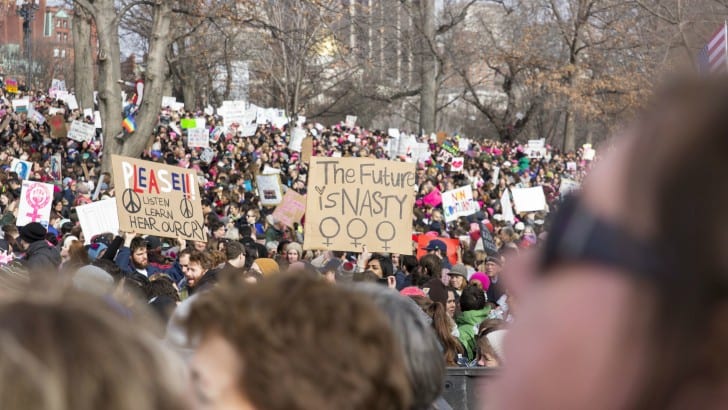
So the question is: Will the upcoming one-day strike calls have as powerful a political economic effect as a classic general strike? Probably not. In that case, will they be as powerful as a major wildcat strike? Not just yet. How about the 2006 Great American Boycott by immigrants? Will they be that big? That’s probably the sweet spot. The recent Women’s Marches were able to pull an estimated minimum of 3.3 million people out on a weekend when many participants weren’t working. Do a third of those numbers on a workday, and you’ve reached the lower estimate for the 2006 immigrant strike.

Frankly, both the March 8 and May 1 strike calls could be big. Both are aimed at constituencies that have demonstrated ability to turn out in large numbers. And neither call is led by labor unions that can’t easily call general strikes; so there is an opening to do so. But they will only be powerful to the extent that they threaten the established political order. And there the differences between the two events become clear. The March 8 Day Without a Woman strike is being called by some of the same forces that organized the Women’s Marches in January. Forces that, as I’ve previously written, are directly connected to the neoliberal Clintonite wing of the Democratic Party. Folks who just lost an election because they refused to put working people’s needs over corporate profits.

But the May 1 Day Without Immigrants strike call is being organized by Movimiento Cosecha—a fast-growing coalition of militant young left-wing immigrant organizers. They are potentially limited by their focus on immigrant communities. However, they were recently screwed by the Democratic Party and the Obama administration—which both failed to respond to their demand that all 11 million undocumented immigrants be granted legal status before Trump came into office. So they are less likely to heed the siren call of Democratic leaders to tone down their protests when they become inconvenient for the Dems’ corporate backers, and therefore far more likely to actually build their May Day effort into something approaching a general strike than the March 8 organizers are.

Their call to action makes that intent quite clear:

One day is just the beginning of a season of strikes and boycotts. We know that each time we strike for a day, we will build power. And the more days we strike, the stronger we will feel. The more desperate those in power become. The more the elite will want business to return to normal. They will be forced to figure out a way to give us permanent protection. And in the process, we will win the dignity and respect that we deserve and demand.

Ultimately, debates over whether major work stoppages are “real” general strikes aren’t the point. What matters is “boots on the ground,” and the ability of organizers to translate their numbers into political and economic gains. Any coalition that can pull millions out of work and into the streets against the Trump administration will write a new chapter in both American political and labor history. Which could be just the game changer our incipient movements for democracy need. But if there turns out to be more than one such coalition, so much the better.

Apparent Horizon is syndicated by the Boston Institute for Nonprofit Journalism. Jason Pramas is BINJ’s network director and senior editor of DigBoston.

Copyright 2017 Jason Pramas. Licensed for use by the Boston Institute for Nonprofit Journalism and media outlets in its network.

Check out the Apparent Horizon Podcast on:

iTunes, Google Play Music, Blubrry, Stitcher, TuneIn, and YouTube

 

HOW TO FIND A DECENT PROGRESSIVE ACTIVIST GROUP

IMG_1034

Photo by Chris Faraone

February 6, 2017

BY JASON PRAMAS @JASONPRAMAS

So you went to one of the recent big anti-Trump actions, and you want to become a progressive activist. Not just vote every year or two. Great. But there are dozens of major left activist organizations and hundreds of minor ones working on a host of issues at all levels. Which one to join?

Politics is a minefield. No two ways about it. And the group (or groups) you choose to work with will determine both the course of your life going forward and, in some sense, the fate of the nation. How do you even begin to decide?

I recommend starting with a gut check. What issues are most important to you? Do you want to take on a big fight like getting Trump and his rogue’s gallery of white nationalists out of power? A smaller fight, like expanding public transportation in your region? Or a huge fight, like saving humanity from global warming?

Once you’ve thought deeply about where your political interests lie, search for organizations that are taking on the issues you care most about. Look hard. Do deep web dives. Ask everyone you trust that shares your values. Then ask yourself a series of questions like the following:

1) Is the group run democratically? Far too many activist organizations—especially on the national level—are not. If all edicts in the group seem to come from top officials, and none of the important decisions are made by the members, you’re probably barking up the wrong political tree.

2) Is the group led by elites? Look at the staff, elected officials (if any), and board. Do you see lots of rich people and CEOs? Lots of Ivy League connections? Lots of big (and therefore corporate) foundations? And you’re a progressive and want to rein in corporate power? Find another group.

3) Is the group’s membership and (more importantly) leadership diverse? Do you see people who look like you and a broad array of your friends in the organization? If not, you may want to look elsewhere.

4) Is the group’s agenda transparent or opaque? What does the organization stand for? Is it developing its own positions democratically, or does it seem to be taking marching orders from some unseen higher level? Always look for a clear statement of its politics, values, and action plan—and an indication of who calls the shots in the group. Such information should be front and center in outreach materials, websites, and social media presences. If it’s not, keeping moving.

5) Is the group connected to the Democratic Party? You’ll need to think very carefully about this question, because it determines where you’ll come down in the debate on the future of the American left. Do you want to be connected to the populist left wing of the party? The neoliberal corporate wing of the party (that got the country into the mess we’re in)? Do you want to break with the party and form a better left party? Or join the extra-parliamentary left that doesn’t believe in electoral politics at all? Definitely study before you leap.

6) Is the group purely reactive? Does it engage its members in political discussion and debate, determine a strategy, take action, analyze the action, course correct, and move on to achieve meaningful political change. Or does it follow various dog whistles from powerful societal institutions and various media without really developing its own analysis, and encourage members to endlessly engage in aimless street protest. Eschew, if the latter.

7) Is the group a cult? A loaded question, yes. But one worth thinking about. Political cults do exist. If any organization you approach starts putting super heavy pressure on you to join them, to spend all your available waking hours working for them for free, and to disassociate from your friends and family … run.

Otherwise, if you don’t see a group you like, start your own! In general, keep your head about you and use your common sense. Avoid well-off wannabe revolutionaries, radical chic hipsters, and faux radicals who encourage your mouth to write checks to cops, intelligence agencies, and the military that your ass can’t cash, and you’ll be fine. Have fun fighting the power. And let’s be careful out there.

Apparent Horizon is syndicated by the Boston Institute for Nonprofit Journalism. Jason Pramas is BINJ’s network director and senior editor of DigBoston.

Copyright 2017 Jason Pramas. Licensed for use by the Boston Institute for Nonprofit Journalism and media outlets in its network.

Check out the Apparent Horizon Podcast on:
iTunes, Google Play Music, Blubrry, StitcherTuneIn, and YouTube

APPARENT HORIZON image for column site

A QUESTION OF STRATEGY: WILL WOMEN’S MARCH LEADERS HELP BUILD A DEMOCRACY MOVEMENT OR JUST PUT THE DEMS BACK IN POWER?

Photo by Scott Murry

January 24, 2017

BY JASON PRAMAS @JASONPRAMAS

The Boston Women’s March for America was a tremendous success by any metric. Likely the largest political demonstration in the city’s history, its estimated 175,000 attendees made it big enough to dwarf even many national demonstrations of the last many years. Which shows two important things. First, there are a great many Massachusetts residents ready to fight to bring down the Trump administration. Second, the state’s population is strongly in favor of women’s rights—and a number of other positions mentioned in the event’s mission statement, including: racial justice, economic justice, human rights, climate justice, and religious freedom. So, credit where credit is due, march organizers did a wonderful job of reading the political moment, and turning out the broad left against a clear and present threat to democracy … in the form of a triumphalist hard right wing of the Republican Party.

However, the local march and hundreds of related actions across the US last weekend—up to and including the main Washington, DC march—all had an inherent political flaw that’s going to be hard to overcome. That is, their organizers appear to have no follow-up plan beyond mobilizing voters to get the Democrats back in power.

This is because the progressive nonprofits and labor unions behind the marches themselves have no high-level strategy beyond that same goal. Which is why many of them could not even support Bernie Sanders, their party’s credible left alternative in last year’s election. And why the Dems are not much better than the Repubs on a host of key issues—and in some cases, as with the Trans Pacific Partnership that President Trump just shot down as a first order of business, they are worse. Because the organizations that comprise the progressive wing of the Democrats, and provide most of its grassroots muscle, continue to refuse to challenge the still-dominant pro-corporate Clintonite wing of the party for control of its platform.

Given that problematic background, it’s easy to understand why the marches were essentially transformed into giant launchpads for the candidacies of key Democratic politicians for the 2018 and 2020 elections. In Boston, for example, the main speaker was Sen. Elizabeth Warren—a clear contender for the 2020 Democratic presidential nomination, having stood down in the recent election and consolidated her power base. Other rising Democratic politicians like Mass Attorney General Maura Healey, Boston Mayor Marty Walsh, and Boston City Councilor and City Council President Michelle Wu also mounted the podium—and none could ask for a better campaign kickoff for their next races. Whatever those races may be.

But electing more Democrats to office is not going to solve the problems this nation is facing. Especially if the party continues to be led elitist technocrats who fake left, but break right on all the issues that matter to its populist wing.

An otherwise decent progressive like Warren will keep pulling her punches on effective policy prescriptions like single-payer national healthcare, and continue to defend Obamacare when she herself has written in favor of single-payer as the “most obvious solution” to our health crisis. Because she doesn’t have the support of party leadership to take on corporate power.

A union-backed mayor like Walsh will continue to base his economic policies on the simple conceit of attracting as many major corporations to Boston as possible—as he did by supporting the GE Boston Deal—in the likely vain hope that doing so will somehow result in more decent jobs for his working and middle-class constituents. Instead of creating public jobs programs and building large amounts of public housing like big city Democratic pols from the 1930s to the 1960s. Pushed by an ascendant and militant labor movement for much of that period. Because, again, he doesn’t have the support of party leadership for such policies. And because today’s union and nonprofit leaders have been unwilling to push Democrats to back the democratic socialist policies that many of them privately believe in.

So that’s the strategic quandary that progressive Democrats of the type who just pulled off huge and successful mass mobilizations find themselves in. They know perfectly well that a society run by and for the rich is incompatible with the fairness and justice they seek. They know that we cannot solve all the dire problems facing America by handing the reins of power to the CEOs—as both major parties have been doing for decades—and hoping for the best. And they know that the best organizing isn’t top-down, but is instead horizontal and, well, democratic.

Yet even when they pull millions into a great event like the marches against President Trump, they remain afraid to let the grassroots they just inspired to action run the political movement they hope to build. And as long as that cycle continues, the Democratic Party might indeed return to power by 2020. But all the marches in the world won’t bring true democracy to the United States.

Apparent Horizon is syndicated by the Boston Institute for Nonprofit Journalism. Jason Pramas is BINJ’s network director.

Copyright 2017 Jason Pramas. Licensed for use by the Boston Institute for Nonprofit Journalism and media outlets in its network.

Check out the Apparent Horizon Podcast on:
iTunes, Google Play Music, BlubrryStitcher, TuneIn, and YouTube


HARD DRUG TRUTHS: END MANDATORY MINIMUM DRUG SENTENCES

January 10, 2017

BY JASON PRAMAS @JASONPRAMAS

The opioid crisis is dire enough without adding insult to injury. With almost 12,000 deaths from overdoses in Massachusetts since the year 2000—increasing sharply in recent years with fentanyl-laced heroin hitting the streets—the human cost to users, their families, and our communities is already tremendous. But thanks to mandatory minimum sentencing for drug-related criminal offenses that cost is far higher than it needs to be.

A bit of history is in order. Decades back, sentencing decisions for such offenses were generally made by individual judges—who could then lower or remove jail time, or order an alternative sentence to a drug treatment facility, for non-violent offenders convicted of simple possession and the like.  

The passage of the Controlled Substances Penalties Amendments Act by Congress in 1984—followed by a number of related laws on the federal and state level—took that power away from the courts and set mandatory minimum sentences that could not be modified by judges. Prisons around the country began to fill with drug offenders. And many nonviolent offenders ended up doing more time than violent offenders like members of major drug cartels.

Worse still, racism was baked into the new system, with drugs like the crack form of cocaine sold in poorer communities of color drawing far longer sentences than drugs like the powder cocaine sold in wealthier white communities. The arrest rate for people of color has remained consistently higher as well. According to the state Sentencing Commission, Massachusetts imprisons Black defendants eight times more than white defendants. Latino defendants are sent up almost five times more.

Then, in 1996, OxyContin—a synthetic opiate pain medication—came on the market in 80 mg pill form. It was developed by a small Connecticut pharmaceutical company called Purdue Pharma—an early pioneer … not in synthesizing oxycodone, the active ingredient in OxyContin which had originally been developed in Germany in 1916, but in something more insidious: the direct marketing of drugs to doctors. According to Pacific Standard, Purdue doubled its sales staff in the first four years of the OxyContin rollout. That staff developed a database that identified doctors who prescribed pain medication more heavily than others. They focused their sales effort on those doctors—encouraging them to overprescribe the medication for a wide variety of conditions. In 2000, the company released a 160 mg pill specifically aimed at users that had developed tolerance to opioids—which became the wildly popular street drug we know today. Crushed and sniffed by tens of thousands of users in the Bay State alone. And so, by 2010, OxyContin accounted for over one-third of American painkiller sales.

Most of you know the rest of the story. The legions of newly addicted Oxy users eventually ran out of prescriptions, and turned to whatever they could get to replace it—inevitably leading many of them to heroin. A sane government would’ve stepped in early on in this process, shut a company like Purdue down, and significantly expanded public funding for solid treatment and recovery facilities for the drug’s many casualties. But that’s not what happened. Instead, Purdue was making over $3 billion a year on OxyContin by 2010, and had a lock on legal sales of the drug until its patent expired in 2013. Even as public funding for treatment got cut.

Meanwhile, street sales of Oxy and the resulting spike in heroin sales led to a whole new wave of nonviolent offenders sent to prison for years with mandatory minimum sentences.

Unfortunately, action to reform such strict sentencing laws has been slow to come at the federal level and here in the Commonwealth. With a new session of the state legislature just beginning, there are no new reform bills to recommend. But it’s reasonable to expect the main reform bill of the last session, An Act to Repeal Mandatory Minimum Sentencing Laws for Drug Offenses, will be reintroduced this time around. The bill would repeal all mandatory minimums for drug offenses and let courts impose sentences that fit the crimes.

It’s ironic that, according to WBUR, “several other states, including conservative states, have overhauled their sentencing laws” while ostensibly progressive Massachusetts lags behind. But thanks to the work of grassroots organizations like Jobs Not Jails and the Mass Organization for Addiction Recovery, high level officials like Mass Senate President Stanley Rosenberg and Chief Justice Ralph Gants of the Mass Supreme Judicial Court have recently gone on record in support of mandatory minimum reform.

That’s great, but without voters across Mass putting pressure on state legislators it could still be years before the needed reform passes. So, the best thing that readers can do to help stop this devastating outgrowth of the already tragic opioid crisis is to watch for the new mandatory minimum reform bill and join advocates to demand that your state reps and senators do the right thing and pass it.

This column was originally written for the Beyond Boston regional news digest showco-produced by the Boston Institute for Nonprofit Journalism and several area public access television stations.

Apparent Horizon is syndicated by the Boston Institute for Nonprofit Journalism. Jason Pramas is BINJ’s network director.

Copyright 2017 Jason Pramas. Licensed for use by the Boston Institute for Nonprofit Journalism and media outlets in its network.

Check out the Apparent Horizon Podcast on:

iTunes, Google Play Music, Stitcher, TuneIn, and YouTube
UNITED WE STAND: AN ADMONITION FOR 2017

19.01-AH-PIC-e1483511292469

January 4, 2017

BY JASON PRAMAS @JASONPRAMAS

As another calendar year begins, it is my custom to prognosticate about what I think is most important for my audience to consider in the months to come. Last year at this time, I asked readers if they wanted to live in a democracy—and I encouraged those who did to join organizations willing to defend and expand the democratic lifeways our society has left.

But how one thinks about democracy depends on where one stands politically. So this year, now that the 2016 election drama has played out, I think it’s worth reflecting on how to unite everyone who believes in American democracy around the cause of saving it. Given that people with very different politics still share a common vision of democracy at a gut level. Though they agree on very little else.

For example, most people who voted for President-elect Donald Trump—outright fascists, theocrats, and incipient monarchs excepted—believe that they did so to defend and expand democracy. Most people who voted for also-ran Hillary Clinton—including former Bernie Sanders supporters who held their noses and took one for the team—believe the same thing. Same goes for Libertarians, Greens, smaller left and right third parties, and a vast array of independents. Most everyone believes that people should have some say over political and economic decisions that affect their daily lives.

However, there is one significant group that doesn’t seem particularly interested in democracy (although they often say otherwise). The “good and the great.” The rich and powerful. The corporate leaders, major investors, and top politicians who comprise the oligarchy that controls the commanding heights of American politics and economics. Trump and Clinton represent different factions of it. And until popular movements reign in that oligarchy, nothing significant will change for the better.

Doing so will have to be a broad effort. Because neither the left nor the right can win this one alone. And removing an oligarchy is no easy task. As such, here’s what I think each political crew should do toward that goal.

Democrats: I wrote my basic prescription for you all a few weeks back … reform your party. Do us all a favor, take it away from Wall Street operatives like Clinton and let the grassroots membership run the show (read up on the midterm 1978 Democratic National Conference for some ideas). Give working Americans someone decent to vote for and there won’t be another repeat of the recent debacle anytime soon.

Republicans: If you’re serious about the small government thing, let’s see some grassroots action against the military-industrial complex, corporate welfare, and the national security state. Also, fight to keep government funding for science and medicine in place. [Evangelical Republicans, keep Matthew 19:24 in mind.]

Greens: Get more of your members elected to local and state offices. The better to develop a core of experienced public servants, and eventually field national candidates who have some hope of striking hard bargains with the major parties to win significant reforms like national health care. Or even some Congressional seats.

Libertarians: Same as the Greens (understanding that you will generally oppose big federal programs). But unseating some of the current crop of racist and nativist Repub elected officials would be super helpful.

Smaller parties, “fusion” parties, and proto-parties: Get larger. We really need to muddle our way to a multiparty parliamentary system.

Non-voters of various political stripes: Even if you don’t believe in electoral politics, or just don’t see a point in voting, there’s still plenty you can do. Help rebuild local and regional democratic institutions like neighborhood associations, benefit societies, community service organizations, clubs, co-operatives, labor unions, and forward-thinking religious groups.

That said, everyone should work in concert to create a more democratic culture. A culture where people don’t just accept decisions handed down to them from on high in any sphere of life, but question them. And demand to be part of making them.

We will debate over every conceivable policy while we build that culture. And that’s OK. In a democratic society, the most important thing is that we’ll be able to have those debates. But without such basic human solidarity—such commitment to “hang together” rather than “hang separately,” as Benjamin Franklin probably quipped—democracy in America is finished.

Apparent Horizon is syndicated by the Boston Institute for Nonprofit Journalism. Jason Pramas is BINJ’s network director.

Copyright 2017 Jason Pramas. Licensed for use by the Boston Institute for Nonprofit Journalism and media outlets in its network.

Check out the Apparent Horizon Podcast on:

iTunes, Google Play Music, Stitcher, TuneIn, and YouTube

apparenthorizon1-square

TEMPORARY RADICALS? DISAFFECTED DEMS NEED TO STAY IN THE STREETS AFTER THE GOP MENACE IS BEATEN BACK

ah-protest-pic-best

November 27, 2016

BY JASON PRAMAS @JASONPRAMAS

There is little agreement on the broad American left. But the ascension of Donald Trump to the top of the political heap caused a virtual panic from the most conservative corporate Democrats to the hardest core anarchists and communists. Which resulted in a sudden, and probably brief, unity of purpose across the various factions. Then, quickly converting their excess emotional energy into useful activity as is typical in times of crisis, hundreds of thousands of people poured into the streets in the days after the election to protest the very idea that a controversial billionaire businessman and reality TV personality is now president of the United States. Including many Democrats who have never attended a protest in their lives.

This a welcome development. Many important social movements perennially suffer from a lack of grassroots participation. So the sudden entry of huge numbers of infuriated mainstream Dems to oppositional politics is positive on the balance.

If, that is, these new entrants remain willing to take direct action in defense of democracy and fight for a host of necessary reforms—from serious attempts to curb global warming to winning real national healthcare to putting racist police under community control.

As long as the new Republican administration remains somewhere within the bounds of traditional American politics, and doesn’t attempt to crush protest outright, then there is a lot of room for the full panoply of transformative social movements to maneuver.

Assuming Trump is unable to solve the central contradiction of his campaign—making big promises to both fellow CEOs and working Americans alike—there is a strong chance that the Republicans will lose control of one or both Congressional houses in two years, and the presidency in four.

Aside from conservatives gaining as many as three seats on the Supreme Court in that period, much of any damage that Trump may do can then be undone. It’s likely that the Democrats will be back in power by 2021.

The problem being, which Democrats? Will it be a newly-emboldened grassroots-led social democratic party? Or will it be the same neoliberal center-right party that was just resoundingly defeated after failing to heed the populist feedback it was receiving from significant parts of its base?

I hope that the former possibility wins out. At the moment, however, it’s far more probable that the currently discredited Democratic leadership will use its power and connections to simply reassert its authority, raise a ton more money, and work to win back Congressional majorities and the Oval Office without changing its political line a jot.

Which leaves a question for all the angry Democrats currently in the streets for social justice: Are you just fighting to get corrupt and elitist Democratic Party leaders back in command in DC? Or are you all willing to go further and fight for the establishment of genuine left-wing political alternatives in both electoral politics and in daily life?

If the recent past is any guide, many of you will stop fighting for racial justice, women’s liberation, LGBT rights, a living wage, public jobs programs, national healthcare, clean energy infrastructure, etc., the moment the Democrats win back the presidency. You’ll figure “great, everything is back to normal.”

But the politics of most leading Democrats—activist progressives like Elizabeth Warren excepted—is one that results in never-ending war, insufficient action on global warming, expanding corporate globalization, gradual privatization of successful public programs, widening poverty, and continuing the so-called Drug War, the prison-industrial complex, and racist policing.

So real social change will not occur unless grassroots Dems stay in the streets and fight their own leadership for primacy—until we can build a more fair, just, and humane society.

That strategy will necessitate either taking over the Democratic Party and forcing it left, or starting a major new left party. In addition to winning myriad (and quite necessary) issue-specific campaigns.

If all that can be accomplished, America and the planet have a chance. If not? If the Republicans hold power for many years? Or the corporate Democrats come back to power and continue allowing Wall Street to drive national policy?

Then we’re going to be in a very bad place very fast.

Apparent Horizon is syndicated by the Boston Institute for Nonprofit Journalism. Jason Pramas is BINJ’s network director.

Copyright 2016 Jason Pramas. Licensed for use by the Boston Institute for Nonprofit Journalism and media outlets in its network.

Check out the Apparent Horizon Podcast on:
iTunes, Google Play Music, Stitcher, TuneIn, and YouTube

apparenthorizon1-square

DEMOCRATIZE AMERICA: THE FIGHT TO SAVE THE NATION AND THE PLANET DOESN’T STOP ON ELECTION DAY

1-KHztEyu66p0cWRK7ncg34w

November 8, 2016

BY JASON PRAMAS @JASONPRAMAS

This is not a dream. For your whole life, you’ve seen images on screens showing brutal political struggles in faraway places like Ukraine and Yemen. And in the rare moments you’ve paid attention to the suffering you’ve seen, you’ve asked yourself, “How could things get so bad that people started shooting at fellow citizens?” Now you’re worried such madness will happen here.

Fortunately, things have not devolved to that point in American politics since that little dustup we call the Civil War. Yes, this has been the ugliest presidential race in recent memory. Yes, it has gone outside the pale of what has been considered acceptable political behavior in the last few decades. But there is nothing even approaching a violent mass uprising on the horizon of American politics. There have barely been any physical altercations at all in the race that finishes today — and the few that erupted didn’t get far beyond the level of shoving matches. So it’s important to keep things in perspective.

However, the danger of political instability has not passed. It has only just begun — regardless of which candidate wins. Because our already tenuous democratic traditions are under threat, and humanity is on the precipice of extinction. The first problem is intimately tied to the second. So it’s critical we get our political house in order if we’re going to be able to grapple with the linked crises that face us. And that means everyone who believes in democracy is going to have to get involved in the following three key battles in the coming years — no matter who is in the Oval Office in January.

Democratize America. Contrary to the official narrative, the US has never really been a democracy. It’s fair to say that we’ve made great progress toward democratization across the arc of our short history. But this nation has always been an oligarchy with elements of a democracy. We can and must do better than that if we’re going to leave a safer and healthier world for our grandchildren than we have now. For starters, we need to reverse Citizens United to help lessen the influence of money on politics, institute proportional representation and instant runoff voting where possible, and look seriously at moving to a multiparty parliamentary system — allowing us to have a politics that more closely represents the will of the full spectrum of the electorate. Such reforms will go a long way toward normalizing civic discourse. Which will in turn help end the threat of American politics getting any uglier anytime soon. Because when people feel like there’s a place for them in the political system, they’re a lot less likely to follow demagogues, join militias, and commence shooting up fellow citizens. To get involved in the movement for a more democratic America, Sen. Bernie Sanders’ Our Revolution organization looks like the best jumping off point — given its solid position on stopping Citizens United with a constitutional amendment.

Ban nuclear weapons. There are still 15,000 of those deadly devices in the world, and the US has about half of them. Studies suggest that only 50–100 “small” Hiroshima sized weapons would have to be detonated to trigger a nuclear winter which would wipe out a good chunk of humanity through starvation. Far more are likely to be used in a shooting war between the US and Russia or China. Yet the US has maintained its policy of allowing a “first strike” with nuclear weapons, and has been pressuring both fellow nuclear superpowers in hot spots like Syria, Romania, Ukraine, the Baltics, and the South China Sea for a variety of bad geopolitical reasons. With smaller nukes available, it will be tempting for the next administration to use one in any military crisis that might result from such brinksmanship. Once a single weapon is used, automated retaliation protocols on all sides will virtually ensure that more will be used. No matter who wins the presidential contest. So the movement to eliminate American nuclear weapons, and win a global nuclear weapons ban is one that everyone needs to join at speed. Check out the International Campaign to Abolish Nuclear Weapons to get involved.

Stop global warming. Neither presidential candidate is prepared to do what is necessary to end the terminal crisis presented by the human-caused warming of the planet. And if we don’t make a near total conversion from an energy system based on burning coal, gas, and oil to one based on (genuinely) clean energy by 2030, scientists are saying that we have no hope of holding warming to an average increase of no more than 2 degrees Celsius worldwide. Another four years of federal status quo will make that transition even less likely to happen in time. Dooming us — at minimum — to the inundation of coastal cities like Boston due to rising sea levels, mass starvation as our growing lands turn to desert and our oceans acidify, and general havoc created by ever-worsening storms and ever-warmer weather. The 350.org movement remains the best organized US-based campaign devoted to minimizing this crisis. So drop them a line right away.

Otherwise, stay active. Stay woke. Another world is possible.


Apparent Horizon is syndicated by the Boston Institute for Nonprofit Journalism. Jason Pramas is BINJ’s network director.

Copyright 2016 Jason Pramas. Licensed for use by the Boston Institute for Nonprofit Journalism and media outlets in its network.

Check out the Apparent Horizon Podcast on:
iTunes, Google Play Music, Stitcher, TuneIn, and YouTube

UMASS CAMBRIDGE: MAKING HARVARD UNIVERSITY PUBLIC WILL SOLVE ITS WORKERS’ PROBLEMS—AND THE COMMONWEALTH’S HIGHER ED CRISIS

umass-cambridge

October 24, 2016

BY JASON PRAMAS @JASONPRAMAS

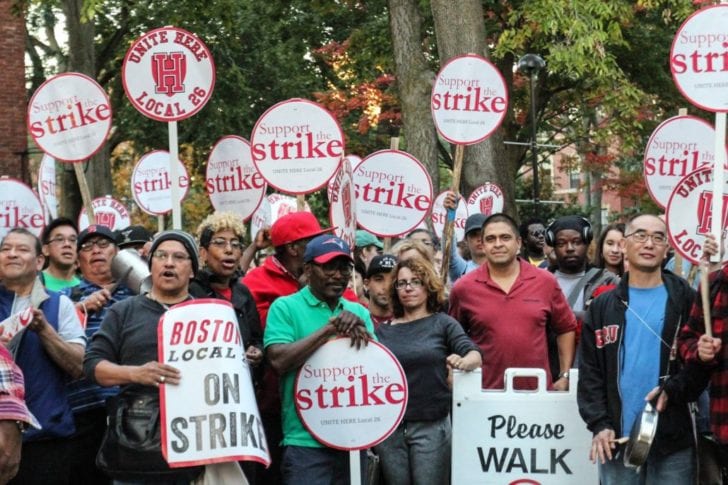
Three weeks into their strike, Harvard University dining hall workers are in a difficult position. Their union’s demands for better wages, benefits, and working conditions are falling on deaf ears in the Harvard administration. They cannot continue picketing indefinitely on $200 weekly strike pay—which itself won’t last for long … and the bosses know it.

That same administration talks about the situation as if the workers are already overpaid since they make wages higher than the industry standard. Even though college food service workers generally get low pay with few benefits by convention. It tries to make the Harvard dining hall workers union, UNITE HERE Local 26, look greedy by asking for more, when all the workers want is a living wage to be able to survive the increasingly insane costs of living in Greater Boston. And a health care package that doesn’t raise their out-of-pocket costs. Which other Harvard unions have already agreed to, sadly.

This despite the fact that Harvard has an unbelievably massive $35 billion endowment. The largest amount held by any institution of higher learning in the world. Larger than the annual budgets of many nations. The school’s endowment page makes it clear that its administration knows that making any pitch for sympathy on labor costs is ludicrous on its face (although that’s precisely what they do when they attack the dining hall workers’ extremely moderate demands as somehow unaffordable). In a section of that page entitled “Why can’t Harvard use more of its endowment in order to cover additional expenses or reduce tuition costs?” the following logic is offered:

Endowment gifts are intended by their donors to benefit both current and future generations of students and scholars. As a result, Harvard is obligated to preserve the purchasing power of these gifts by spending only a small fraction of their value each year. Spending significantly more than that over time, for whatever reason, would privilege the present over the future in a manner inconsistent with an endowment’s fundamental purpose of maintaining intergenerational equity.

A statement worthy of a CEO or banker. Or neoliberal ideologue. Basically saying, We can’t spend more money from the endowment because we don’t want to touch our principal and lower our profits. Funny attitude for a supposed nonprofit. One that’s unfortunately being emulated at colleges around the country as the privatization of higher education continues apace.

Since Harvard is unwilling to spend down its endowment by even a tiny percentage to ensure all its employees receive truly fair wages and benefits, it’s all the more imperative that dining hall workers continue to press their demands. And that more people support them.

Because not only is Harvard screwing its own food service staff while amassing wealth beyond the dreams of avarice, it is also doing grievous damage to the Massachusetts public higher education system. Which raises the stakes considerably. And links the problems of one group of working people to the fortunes of the working families of an entire state. For whom shaking the edifice of Harvard’s endowment must become a central political concern.

Image via Boston's Local 26

Image via Boston’s Local 26

Understanding Harvard’s finances is the key to apprehending why the university’s very existence is problematic in a democracy—and a clear and present danger to the state public higher education system. And to answering the central question: Why is an institution of higher learning allowed to run like a multinational corporation? Socking away funds that it possesses mainly because it educates the children of the one percent—scions of powerful families who steal money from the rest of us in myriad ways and then donate part of that money back to the supposedly nonprofit school in exchange for income tax breaks. A school not required to pay taxes on its vast income by dint of that nonprofit status. Which then also takes huge amounts of public funds despite being a private school.

It’s also worth asking why Harvard is not a public college. Why is it not UMass Cambridge? Harvard was, after all, originally part of Massachusetts state (and colonial) government. Yet over the centuries it was able to reorganize itself as a private nonprofit school, and essentially write the rules it plays by.

But for a “private” school it’s certainly awash in public money. A brief review of how Harvard enthusiastically drains government coffers that it refuses to replenish should make it painfully obvious that it is indeed a public university. And therefore in dire need of democratic reform to better align its mission with the needs of the Mass public higher ed system.

First, all the funds in the Harvard endowment, and all the money it makes from financial investments, is not taxed. Neither is all the property Harvard owns—on which it famously expends small “Payments in Lieu of Taxes” (PiLoTs) instead of much higher property taxes. According to Slate, a report by Nexus Research and Policy Center—a right-wing pro-corporate think tank that I would normally avoid citing—does some sloppy math that nevertheless helps us think more clearly about the magnitude of the problem with giving private schools nonprofit status. The report says that, in 2014, Harvard made the equivalent of $48,000 in tax savings from federal, state, and local governments for each of its students. Many of whom can definitely afford to pay full freight on their education. While predominantly working and middle class Massachusetts public college students are educated in woefully underfunded state institutions. The Nexus report indicates that UMass Amherst—the Commonwealth’s flagship university— made only the equivalent of $9,900 in tax savings for each of its students. While undergraduate tuition and fees amounted to $13,258, and average room and board costs were $10,957, for a total cost of $24,485 that year. Even before thousands in book costs and other fees are considered.

Second, although it may not be obvious to outsiders, many Harvard students use public grants and loans to get through school. According to its website, the annual disbursement from the Harvard endowment covered 35 percent of the university’s $4.5 billion operating budget in 2015—including much of the cost of tuition and fees for undergraduate students who need it. And the Harvard administration makes clear that “Even with endowment support, Harvard must fund nearly two-thirds of its operating expenses … from other sources, such as federal and non-federal research grants, student tuition and fees, and gifts from alumni, parents, and friends.” But a good chunk of the aforementioned tuition and fees is covered with public money.

It’s true that Harvard pays all expenses for the 20 percent of current undergrads who come from families that make less than $65,000 a year. One cheer for that given the provenance of Harvard’s money. However, undergrads whose families make between $65,000 and $150,000 a year are expected to contribute up to 10 percent of the total cost of their education annually. And undergrads whose families make more than $150,000 a year pay concomitantly higher percentages of their education costs. Students whose families can’t cover those costs, and don’t receive enough scholarships, grants, or stipends from private sources can apply for federal and state financial aid like any other college student(though foreign undergrads generally don’t qualify for such aid).

Graduate students lean more heavily on public support. Harvard financial aid is similar to other universities in its expectation that its grad students—especially the cash cow master’s degree students—will apply for federal and state financial aid for any expenses they can’t pay out of pocket. Its PhD students get a supposedly free ride, as elsewhere, but the stipends the school pays for their labor as teaching and research assistants clearly aren’t much better than anywhere else given that they are now trying to emulate their peers at public universities by organizing a labor union. Certainly not enough to live on for many students. So public grants and loans are used to fill gaps in funding.

Harvard made its estimated federal grant and loan totals available online for the 2011-2012 academic year. Its students received $10,257,035 in federal grants, $8,371,891 in Perkins Loans, and $135,249,758 in federal direct loans. A tidy sum to be sure.

Third, and perhaps most damningly, Harvard gets a ton of direct federal appropriations every year. To cite just one significant example, in 2014, Harvard had about 20,000 students and received $572,918,000 in federal research and development money according to the National Science Foundation. About $28,646 per student, although it’s obviously not distributed that way. Critics may respond “no harm, no foul” since Harvard gets lots of public R&D money because they do lots of R&D. But that gets things backwards. Harvard does lots of R&D because it has long gotten lots of public R&D money—which should be used to fund public universities to do the work instead. With more public oversight in the public interest.

That same year, the UMass system had almost 74,000 students and received $362,157,000 in research and development money from the federal government. However, the Massachusetts public higher education system also includes nine state universities and 15 community colleges. Both additional groups of colleges receiving only negligible federal research and development funds as teaching colleges rather than research colleges. So the government money UMass gets for R&D covers all of the 194,371 students in the combined public higher education system in the Bay State in the period in question. Amounting to a mere $1,863 per student. Or about $4,894 per student looking at just the UMass system.

Harvard also gets other money from various branches of American government at every level—overtly or covertly, directly or indirectly. But for anyone who believes in public higher education as a vital democratic institution, every penny of government funding that goes to an elite institution like Harvard is money that should be going to the cash-starved public university system. And Harvard is only one of over a dozen supposedly “private” universities with major endowments in Massachusetts who take public money. Others include: Amherst College, Boston College, Boston University, Massachusetts Institute of Technology, Northeastern University, Smith College, Tufts University, Wellesley College, and Williams College. Plus dozens of smaller privates and erstwhile “for-profits” that suck up even more public funds. [Ironically, as part of a decades-long trend of public universities emulating the privates, UMass itself has an endowment of over $700 million. Much of which should be released to reverse faculty and staff cuts at schools like UMass Boston, and the remainder could be kept in a reasonable “rainy day” fund.]

Such hoarding must be stopped. More to the point, the private university system has to be dismantled if the dream of free higher education for all is to be guaranteed. An attainable dream other countries with far less wealth than ours have been able to manage for decades. One which could be achieved by simply taxing the rich and corporations fairly on the state and federal level to pay for such social goods. An even taller order than the policies under discussion here.

For now, if you really want to help the Harvard dining hall workers and much of the population of Massachusetts in the bargain, help start political movements to demand structural reform of the state university system—and ultimately the national higher ed system in its entirety.

As an interim measure, such movements can push our state government to seize the endowments of so-called private colleges like Harvard and absorb all of their campuses into the public higher education system. Which will end the Commonwealth’s higher ed crisis by flooding the system with once-hoarded money. Guaranteeing a decent college education to more Mass residents while eliminating bastions of privilege and power in our midst. And naturally, a well-funded public higher ed system would have the means to pay its workforce properly and a tradition of “wall-to-wall” unionization that would leave no campus workers unprotected. Solving the problems of the Harvard dining hall strikers, and all other previously low-paid workers at every campus in the Commonwealth.

The parting shot? In 2015, the entire Massachusetts budget for public higher education was $1,462,827,301. Well below the $1.6 billion disbursement from the Harvard endowment for operating expenses that same year.

Meanwhile, the 2017 Mass higher ed budget is only $1,157,298,156. With worse cuts on the horizon.

UMass Cambridge anyone?

TUES., OCT. 25, 2016 UPDATE: Early this morning, the Harvard Crimson reported that a tentative agreement has been reached by the striking dining hall workers and the Harvard administration. The full membership of the UNITE HERE Local 26 dining hall workers unit is slated to vote on the agreement tomorrow (Wed., Oct. 26, 2016), and could be back to work as early as Thursday, Oct. 27, 2016.

Apparent Horizon is syndicated by the Boston Institute for Nonprofit Journalism. Jason Pramas is BINJ’s network director.

Copyright 2016 Jason Pramas. Licensed for use by the Boston Institute for Nonprofit Journalism and media outlets in its network.

Check out the Apparent Horizon Podcast on:

iTunes, Google Play Music, Stitcher, TuneIn, and YouTube

FIGHT WHERE YOU STAND: ORGANIZING FOR DEMOCRACY ON THE JOB CAN SPARK A MOVEMENT FOR DEMOCRACY NATIONWIDE

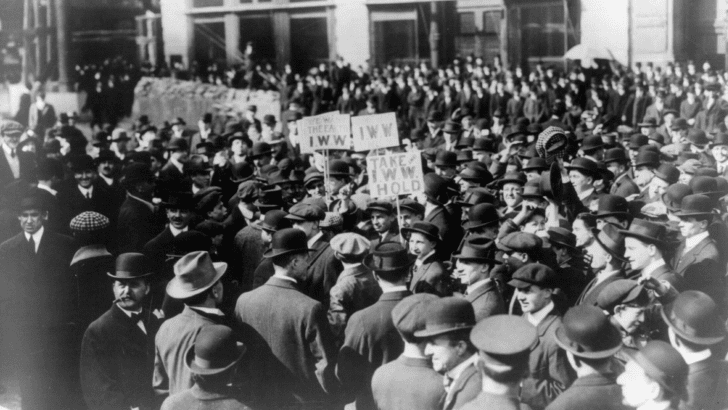
IWW Demonstration. New York (1914)

IWW Demonstration. New York (1914)

October 13, 2016

BY JASON PRAMAS @JASONPRAMAS

In a month featuring a couple of significant labor actions in the Boston area—the Harvard University dining hall workers strike for better pay and benefits, and the Boston Carmen’s Union’s recent civil disobedience action against privatization at the MBTA—it’s worth reflecting on the difference between unionized workers and other workers in the US. Which can be summarized as follows: Union workers fight.

One can criticize them for not fighting hard or effectively enough, and I certainly do from time to time, but when push comes to shove union workers will push back. Collectively. Putting them in a stronger position than the rest of working people in this era. Nearly 90 percent of whom have no representation on the job. Tens of millions of workers who are unprotected “employees at will” that can basically be fired at any time for any reason other than open discrimination. And chances are, you’re one of them.

Yet the reaction by many ununionized workers to their unionized fellows can be puzzling. Egged on by conservative ideologues, the common refrain on social media and in bar rooms from coast to coast is that union workers are “greedy” for wanting more than their bosses give them. Even as billionaires control ever more vast sums year by year. And deploy that wealth to influence politics to make themselves richer by the day.

This leaves union critics caught in a rather obvious contradiction. On the one hand, under capitalism we’re all supposed to applaud people who get rich for constantly demanding more, more, and still more. For themselves alone.

But when union workers demand more as a group, that’s somehow bad. Resulting in the spectacle of anti-union working people arguing that fellow working people in unions need to start acceding to less. Advancing the ludicrous claim that there’s not enough money and stuff to go around in our tremendously wealthy society for anyone but the rich.

Conservative critics—some working people among them—actually think it’s better for such union workers to disband their unions and be satisfied with whatever their bosses feel like giving them. Or, as they typically put it, to accept what “the market” will bear. To join ununionized workers in the war of all against all. Racing each other to the bottom of the economic pyramid, until a new feudalism grips humanity. Where “the multitude,” as Antonio Negri and Michael Hardt put it, are dominated completely by “the one percent” named so accurately by the Occupy movement.

To prevent such a dystopia from ever coming to pass, it’s time for ununionized, and therefore unorganized, workers to draw a proverbial line in the sand at every workplace in America—including right here in Boston.

In place of the culture of fear that reigns at most every job—the fear of being fired for promulgating even the slightest appeal for justice—there must be a culture of democratic resistance. Workers must start organizing together wherever they are to demand more. More money, better benefits, better working conditions. And critically, more control over their workplaces.

This organizing can involve joining traditional unions where possible, but that is not a necessary precondition to starting to fight back. It can begin as simply as holding meetings after work, discussing problems with the way things are going day-to-day, looking into how workers in similar situations have dealt with their problems on the job, and deciding how to fight for redress.

Some will say that such conflict is old-fashioned and counterproductive, and that it’s far better to work together with owners and bosses to come to some kind of accord on the job. From a position of permanent weakness. Leaving power in the hands of the monied elites. In your workplace and in the larger political realm. I would counter by quoting the preamble to the constitution of the storied democratic union of the turn of the 20th Century, the Industrial Workers of the World (IWW), “The working class and the employing class have nothing in common. There can be no peace so long as hunger and want are found among millions of the working people and the few, who make up the employing class, have all the good things of life.”

As the horrendous presidential race approaches its climax, it’s important to keep this in mind. If you’re wondering why both major party candidates are terrible, and why neither of them are standing up for the interests of working people—for your interests—the old language of radical democracy, plainly expressed by the IWW preamble, provides the beginnings of an answer. The rest of that answer—at your job and in world that surrounds it—is up to you. And all of us in the multitude.

HORIZON LOGO TRIMMED

Apparent Horizon is syndicated by the Boston Institute for Nonprofit Journalism. Jason Pramas is BINJ’s network director.

Copyright 2016 Jason Pramas. Licensed for use by the Boston Institute for Nonprofit Journalism and media outlets in its network.

Check out the Apparent Horizon Podcast on:

iTunes

Google Play Music

Stitcher

YouTube

PLAY TO WIN: UK LABOUR PARTY LEADER SHOWS THE AMERICAN LEFT HOW TO MOVE BEYOND SYMBOLIC POLITICS

jeremy-corbyn-labour-can-win-a-snap-general-election-video-interview-politics-the-guardian

September 29, 2016

BY JASON PRAMAS @JASONPRAMAS

Last week—as is the case many weeks every fall and spring in Boston—notices of small scripted protests by an array of area progressive nonprofits, unions, and student groups got me thinking about the rut the anti-corporate American left has been stuck in for decades. Most especially about the damage done by the habit of ineffectual symbolic political action on a host of important issues. Combined with tailing after a corporate-dominated Democratic Party establishment. Which, time and time again, ignores or actively betrays its base on key issues like jobs, education, healthcare, global warming, and military spending. As it’s done during the current presidential race.

But what if there was a way to change the whole political game for the oppositional left? After all, we almost saw such a tectonic shift happen this year with the Bernie Sanders campaign. There have also been glimpses of a more vibrant, creative, and successful progressive politics from the Occupy and Black Lives Matter movements over the last five years. What if left activists could get back to a mass politics that can really win solid victories for working families?

The way forward, it seems, is not yet to be found on our shores. However, it might be on view in the United Kingdom … where Jeremy Corbyn just won yet another vote to remain the leader of the Labour Party.

Who is Jeremy Corbyn?  Think of him as the Bernie Sanders of the UK. But one who has gotten a good deal farther politically than the original Sanders has to date. In his context, being the leader of the Labour Party is kind of like being the head of the Democratic National Committee. Except that the levers of actual power are more built into the Labour Party structure than the Democratic Party structure. And the party sits within a parliamentary political system where its leaders have a lot more control over what their elected officials do than their American counterparts. At the same time, Labour members get to vote directly for their party leaders—unlike Democrats. So when a socialist like Corbyn wins leadership elections twice in under a year and a half, it means that he has the power to help spark changes in his party of the type that Sanders can only dream of presently.

Since Corbyn first ran for Labour Party leader last year—on a platform well to the left of Sanders that calls for an end to austerity policies that hurt working people, renationalizing the once-public UK rail system, unilateral nuclear disarmament, and refusal to support Clinton-style “bomb diplomacy” (sorry, “humanitarian intervention”) in the Syrian war—he has increased the number of voting party members and supporters from 200,000 to over 600,000. Even while fighting a running battle with the corporate-backed acolytes of the neoliberal warmonger Tony Blair for full control of the party. Many of those new members are disenfranchised young voters of the same type that supported Sanders.

What Corbyn is doing with those young folks is fascinating. Upon winning his second leadership election by 61 percent last week, he didn’t talk about beating the ruling Conservative Party in the next general election. Instead he’s planning to deploy the growing militant grassroots of his party to win political victories in advance of the next election. Which looks like a completely different strategy than the one Sanders is taking post-primary—so far focusing his new Our Revolution organization on electing more progressive Democrats to office. Even as that party remains in full control of its Clintonite corporate wing. [Although in recent days, Our Revolution is starting to sound more like Corbyn’s similar Momentum organization—which is all to the good, and perhaps unsurprising given that the two insurgencies have long been in touch.]

And what issue is Corbyn focusing on? Public education. Namely stopping the Conservatives from increasing the fairly small number of UK public exam high schools known as “grammar schools.” He is calling for the large socialist camp coalescing around Labour to defend the egalitarian tradition of quality public education for all in Britain. Rather than allow the grammar schools to continue cherry-picking middle and upper class students, and helping them get into elite universities over the heads of working class students. Thus attempting to perpetuate the ancient British system of class privilege in education long after it was formally constrained. The Labour left is also likely to push to end the charter school-like “academy” (or “free school”) system that is allowing corporations to run many public secondary schools in Britain. Lining their pockets, threatening unionized teachers, and further limiting opportunity for working class students in the process. The Conservatives, for their part, plan to expand the academy system to 100 percent of secondary schools and many primary schools besides. If allowed to proceed unchallenged.

Street protests are absolutely part of what the reviving Labour Party and its allies are doing to challenge the corporate wing of their own party and the Conservative Party. Plus, Corbyn supporters have the possibility of leading their party to victory in a future general election, and starting to implement significant democratic socialist reforms thereafter. Echoing their predecessors in Labour leadership at the conclusion of World War II. Reforms like massive public jobs programs, building lots of good public housing, expanding government-funded lifelong educational opportunities for all, deprivatizing the still-impressive UK national health system, rolling back the assault on unions—while cutting the military budget and raising taxes on the rich and the corporations to pay for it all.

So their protest campaigns against conservative policy initiatives are not limited to small numbers of people waving signs and chanting slogans at the wealthy and their minions in business and government like latter-day Don Quixotes. Corbyn and his supporters are taking control of the Labour Party away from its discredited neoliberal leadership and using it to build a democratic socialist movement in the UK. That very project has been attempted in the Democratic Party before by movements like the Rainbow Coalition – and has been crushed every time. Based on that kind of experience, some American leftists feel that the structure of the party precludes such maneuvers from succeeding. A position potentially strengthened by Sanders’ dispiriting loss in the primary—after what was arguably the strongest attempt to take over the Democrats from the left in history.

Positioning the left—the actual left—for political victory in the US will therefore be extremely difficult. No two ways about it. And it’s not clear whether trying to commandeer the Democrats like Corbyn’s movement is doing with the UK Labour Party or building up small left-wing formations like the Green Party into a national powerhouse or some combination of the two strategies will lead to the desired outcome.

But one thing’s for sure. Corbyn’s success is built on grassroots activism. If we’re going to see similar successes for the American left at the national level, progressive nonprofits, unions, and student groups in cities like Boston will have to do better than calling sporadic underattended rallies, marches, and teach-ins—coupled with desultory lobby days where their peonage to the Democratic establishment is generally on display to their detriment. And start winning real political battles instead of scoring points on phantom targets.

Apparent Horizon is syndicated by the Boston Institute for Nonprofit Journalism. Jason Pramas is BINJ’s network director.

Copyright 2016 Jason Pramas. Licensed for use by the Boston Institute for Nonprofit Journalism and media outlets in its network.

Check out the Apparent Horizon Podcast on:

iTunes

Google Play Music

Stitcher

YouTube